When a carrier can reduce a routine claims review from eight hours to eight minutes using AI, the era of "wait and see" has officially ended. Why? Agentic AI, technology that doesn't just answer questions but actively executes tasks, is transforming and speeding up claims processing, underwriting, and customer service. For insurance leaders, the question is no longer whether to adopt these autonomous agents; it’s how to deploy them without turning their existing data silos into operational liabilities.
This is why the real breakthrough in agentic AI for insurance isn't the technology itself. It's how you pair it with the right data architecture, one built to give agents and humans a single, current view of the business, which is exactly what MongoDB Atlas is designed to do.
Scattered systems, slower decisions
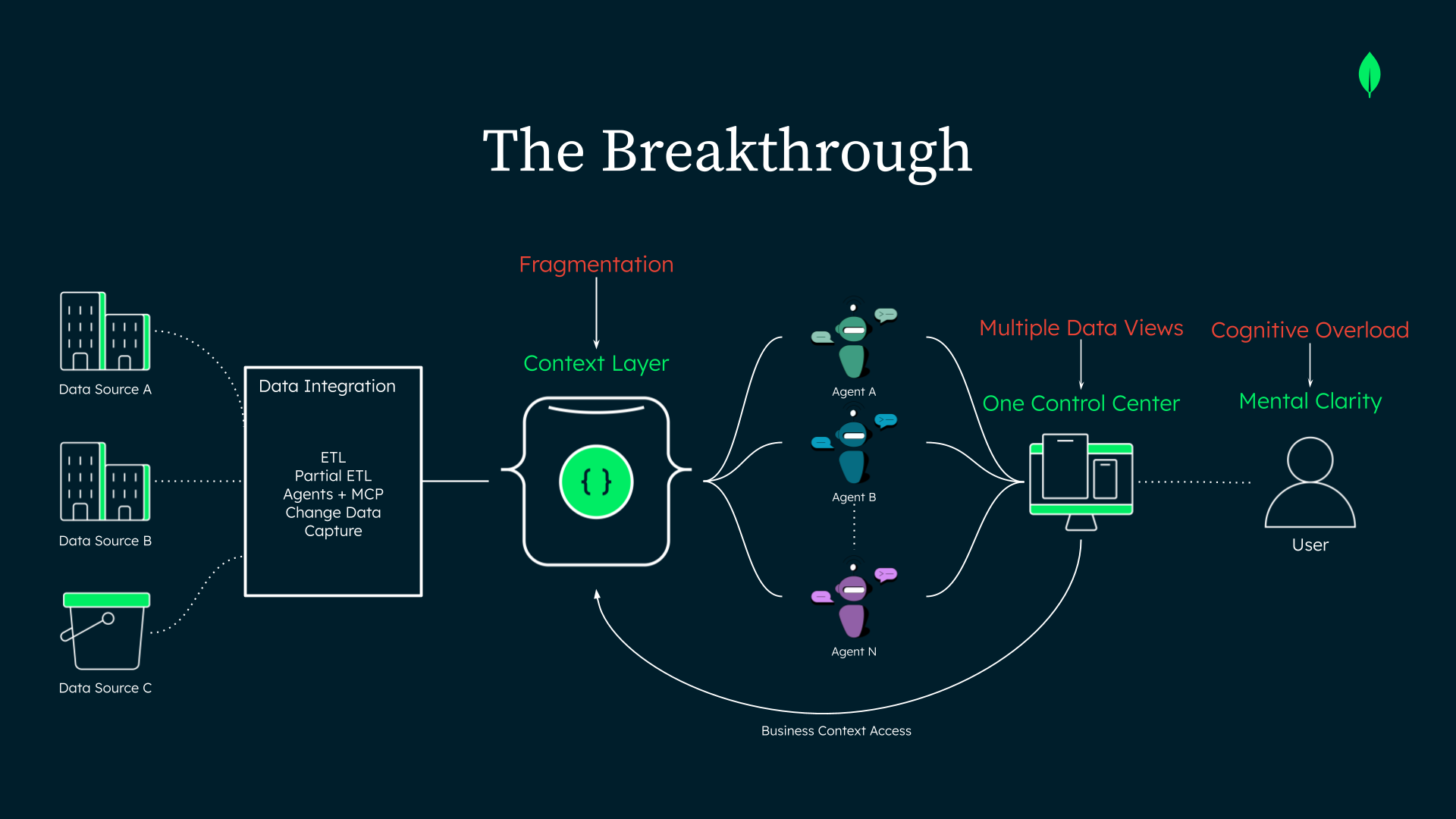
Adding AI agents to a fragmented environment doesn’t solve the problem—you just multiply it by adding another disconnected system. An agent with its own isolated copy of policy and claims data might move fast, but it’s working with an incomplete view that, with time, will show declining performance. The gap between what the agent sees and what your team sees becomes yet another problem.
This is why the real breakthrough in agentic AI for insurance isn't the technology itself. It's how we pair it with the appropriate data architecture that powers it.
Getting this right can lead to something similar to a control center for agentic operations. This would exist in a single environment where AI agents and human teams draw from the same shared context layer instead of a dozen disconnected sources. Every policy detail, every claim update, and every customer interaction lives in one place where people and AI agents read from and write to that same living record. The technical details are not that important. The impact, on the other hand, shows that developing a control center delivers both speed and safety.
Figure 1. The transition from fragmented data silos to a unified agentic control center.
Creating a single source of truth with MongoDB
MongoDB Atlas powers this shared “control center” view by storing policy data, claims records, and the context layer that AI agents rely on, all in a single platform. MongoDB's flexible document model is built for exactly this kind of variety. Agent conversations, human approvals, and manual edits all differ in shape and detail, but they can live side by side in the same collection without forcing every entry into rigid, matching columns.
That flexibility means insurers can add new agents, new data types, and new use cases without redesigning their data architecture each time. In an era where the shape of your data changes constantly, whether it's a new agent's memory or a new claim field, that adaptability is the difference between a platform that keeps pace with AI and one that becomes the next bottleneck.
A blueprint for the future of insurance operations
When AI agents and your team share one source of truth, three critical advantages emerge:
Accelerated resolution: Information no longer travels through disparate systems to get resolved. An AI agent retrieves a policy, claims history, and prior conversation in a single motion. Your staff stops re-entering the same data across multiple platforms because it all lives on one platform.
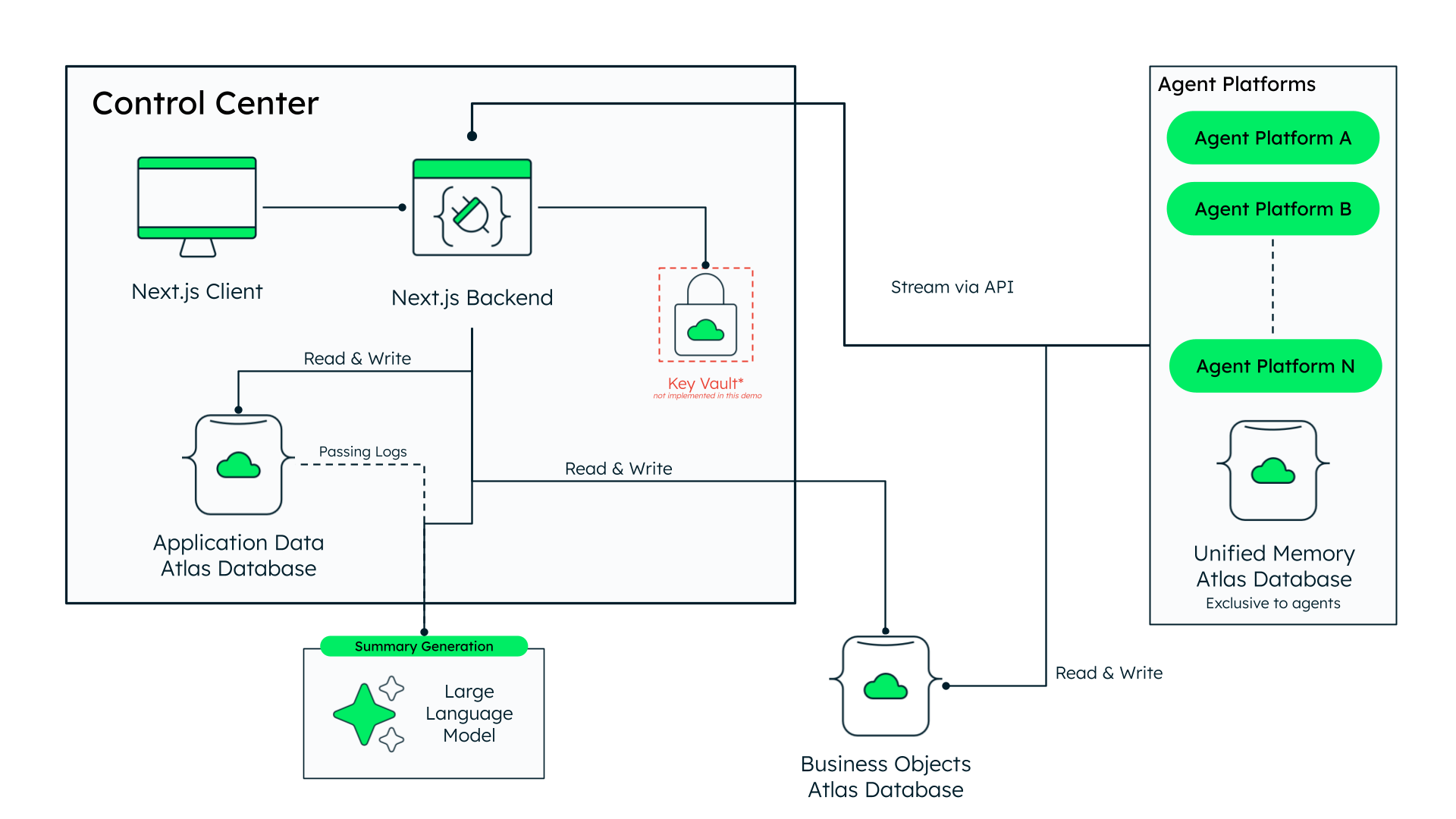
Seamless human oversight: A shared context layer keeps human decision-making built directly into agentic workflows. When an AI agent recommends a next step, a human reviewer evaluates it against the same record the agent used—not a separate, potentially outdated version. This shared visibility lets insurance teams safely hand routine work to AI agents while keeping high-stakes decisions—such as large payouts, coverage disputes, and policy modifications—firmly in human hands.
Built-in compliance: When agents and people work from a single shared record, it creates an automatic trail of who performed what actions. It’s not a separate audit system layered on top of your workflow; it exists simply because all the work happens in one unified place.
Figure 2. Technical architecture of the agentic control center, featuring unified memory and database integration.
That's the real story behind agentic AI adoption in insurance. It isn't about choosing between moving fast and staying in control. A single shared view, powered by a unified context layer, delivers both. Insurers who build on this foundation position themselves to scale AI agents across claims, underwriting, and customer service without sacrificing the oversight that regulators, customers, and their own leadership expect.
As AI adoption accelerates across every industry, the companies that invest in the right data foundation now will be able to deploy AI agents safely and efficiently, at scale, for years to come.
Next Steps
Learn how you can use MongoDB for agentic claims processing.
Explore how MongoDB's Vector Search is used to speed up underwriter tasks with the AI Insurance Underwriter. Ready to start building? Register for MongoDB Atlas and spin up a free cluster today.