Willkommen zu unserer Serie über den Aufbau einer Plattform zur Bekämpfung von Finanzkriminalität mit MongoDB als einheitliche Datenplattform, die den Anforderungen moderner digitaler Finanzoperationen gerecht wird. Falls Sie es verpasst haben, werfen Sie unbedingt einen Blick auf die Serienübersicht.
Wir beginnen unsere Reise in der Phase, in der jede Kundenerfahrung beginnt: Onboarding eines neuen Kunden, oder wie es in der Welt des Risikomanagements heißt, eine neue „ Einheit“ (um die Konzepte von Einzelpersonen und Unternehmen zu vereinheitlichen). Lassen Sie uns die einzelnen Schritte des Prozesses erkunden.
Schritt 1: Erfassung potenzieller Kundendaten
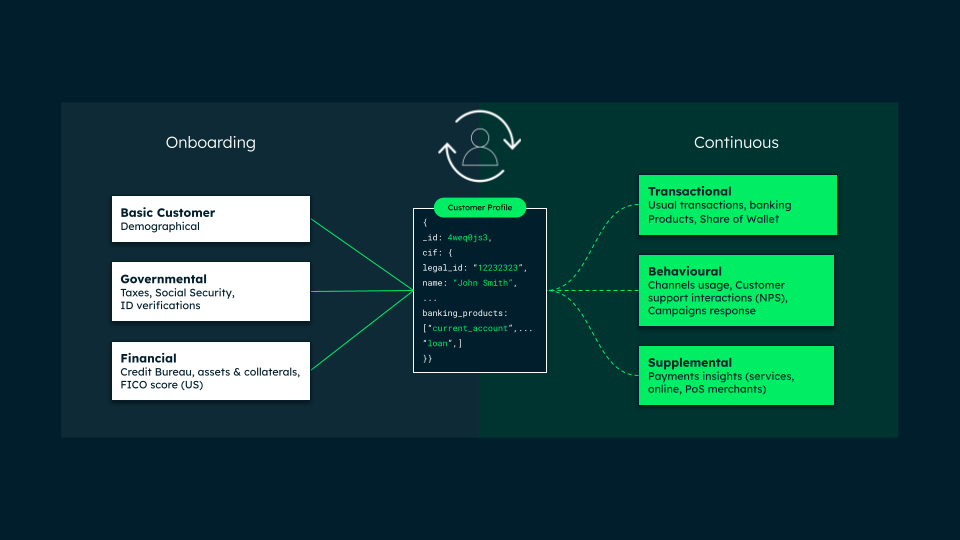
In dem Bestreben, einen neuen Interessenten in einen Kunden zu verwandeln, beginnen die Finanzinstitute mit der Erfassung der erforderlichen Daten: von grundlegenden (demografischen) Daten über rechtliche Identifikations- und Steuerinformationen bis hin zur Erfassung aller relevanten Daten im Zusammenhang mit dem finanziellen Leben des potenziellen Kunden (Kreditbüros/FICO-Scores, Vermögenswerte und potenzielle Sicherheiten).
Sobald diese Datenpunkte erfasst sind, müssen Sie ein dynamisches Profil erstellen, das „ereignisbasiert“ kontinuierlich aktualisiert wird. Die Erstellung eines dynamischen Profils verfolgt zwei Ziele: die Einhaltung der Know-Your-Customer-Vorschriften (KYC) und gleichzeitig die Segmentierung des Kunden für kommerzielle Zwecke (d. h. die Ermittlung des besten Angebots).
Technisch gesehen stellt dies eine große Herausforderung dar: Um ein dynamisches Profil zu erhalten, müssen wir Daten aus verschiedenen Quellen und Schemata aggregieren. Hier kommt das flexible Datenmodell von MongoDB zum Tragen.
Abbildung 1. Von statischer zu ständiger Überwachung.
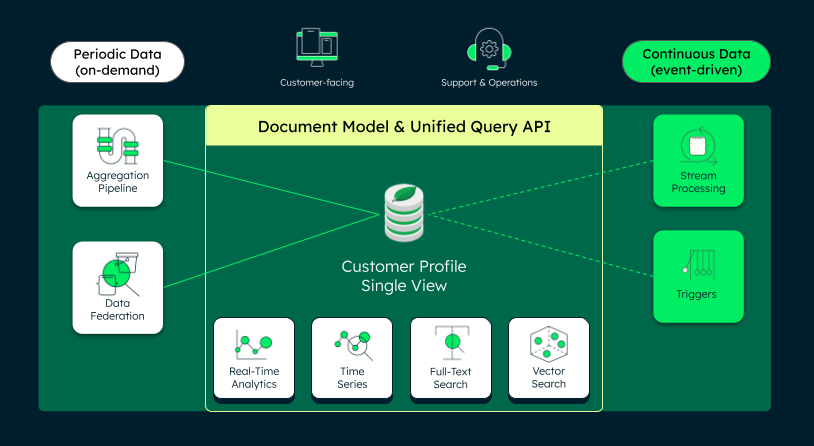
Das Datenmodell von MongoDB ist in der Lage, alle eingehenden Daten nahtlos zu aggregieren. Die Lösung bietet außerdem nativ integrierte Datenplattformdienste, die in einer einheitlichen API verfügbar sind. Diese kann von kundenorientierten Anwendungen oder von Support- und Betriebssystemen genutzt werden.
Abbildung 2. Konvergierter Datenspeicher für KYC.
Schritt 2: Grundlegende Überprüfung des Kandidaten
Sobald die Daten potenzieller Kunden erfasst sind, beginnen die Überprüfungen zur Bekämpfung von Finanzkriminalität mit einer trügerisch einfachen Frage: Wer ist dieses Unternehmen? Bei Compliance-Prüfprogrammen ist die Antwort selten eindeutig. Eine einzelne reale Person oder ein Unternehmen kann systemübergreifend mit unterschiedlichen Namen, Adressen, Kennungen und Beziehungen auftreten, manchmal aufgrund harmloser Datenqualitätsprobleme, manchmal als bewusster Versuch, die Erkennung zu umgehen.
Daher ist ein umfassender Vergleich erforderlich (der über den reinen Text hinausgeht). Auch hier zeigen sich die Fähigkeiten von MongoDB hervorragend. Wir können Text und kontextuelle (semantische) Daten kombinieren, um bessere Ergebnisse zu erzielen. Dies wird als hybride Suche mit dem MQL-Operator $rankFusion bezeichnet.
Abbildung 3. Beispiel für parallele Suchergebnisse, die die erweiterten Suchfunktionen von MongoDB zeigen.
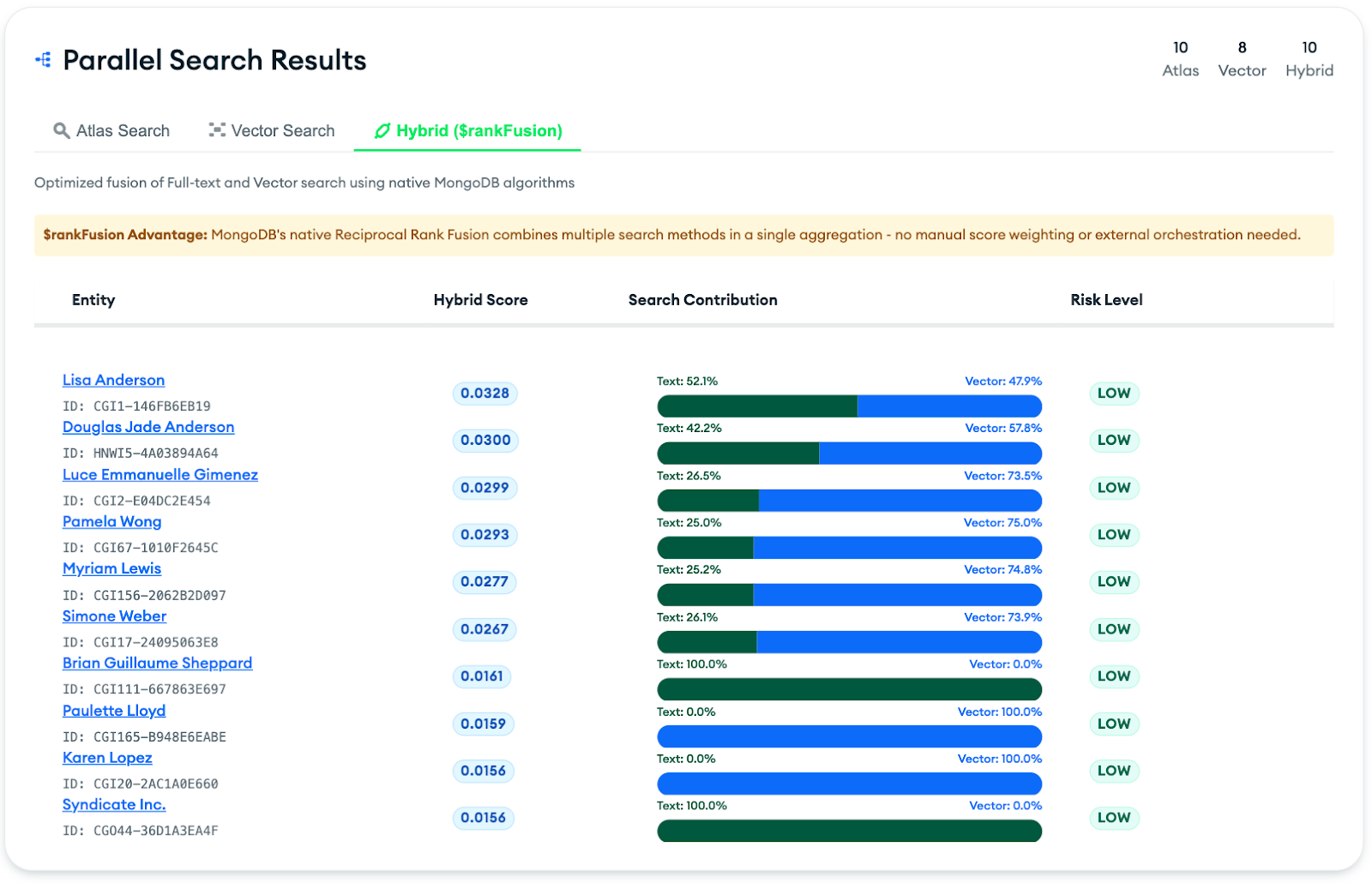
(Das Bild stammt von unserem Demo-Prototyp. Offenlegung: Das Erscheinungsbild stammt von einer benutzerdefinierten Benutzeroberfläche, die für Demozwecke entwickelt wurde. Es ist nicht Teil des MongoDB-Angebots.)
Der größte Vorteil der Nutzung von MongoDB ist, dass all diese fortschrittlichen Suchfunktionen integriert und im selben MongoDB-Cluster verfügbar sind, ohne dass die Daten anderswohin verschoben werden müssen oder externe Suchmaschinen von Drittanbietern verwendet werden müssen.
Schritt 3: Compliance-Überprüfung
Nachdem wir ähnliche Profile identifiziert haben, müssen wir nun Compliance-Prüfungen durchführen. Das Hauptziel besteht darin, die Beziehungen des Unternehmens zu analysieren, und dazu müssen wir alle potenziellen Verbindungen zu bestehenden Bankkunden und Transaktionen mit hohem Volumen überprüfen. Technisch gesehen benötigen wir einen Netzwerk-Graph aller möglichen Beziehungen:
Abbildung 4. Beispiel für den Netzwerk-Graphen einer Entität.
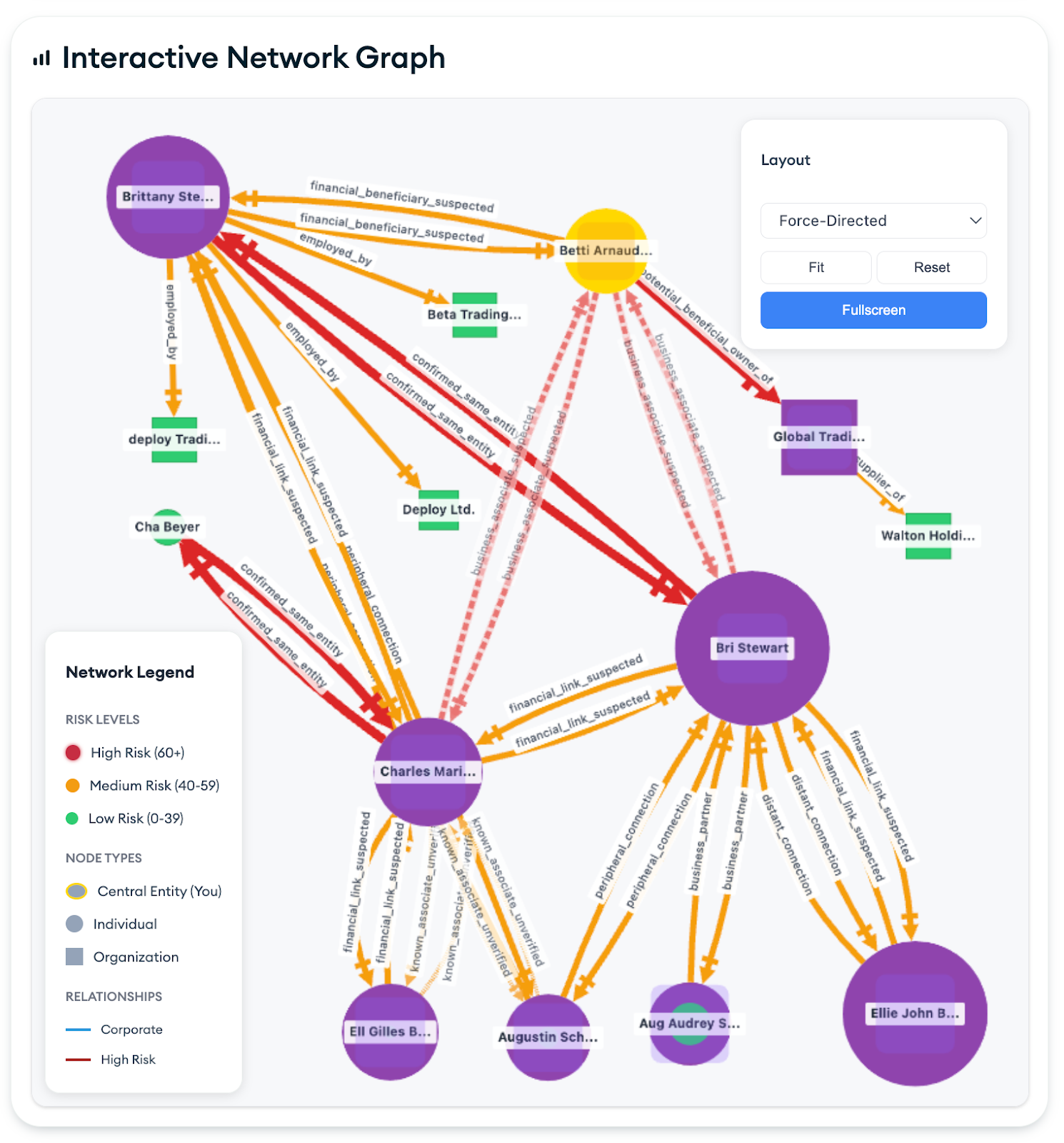
(Das Bild stammt von unserem Demo-Prototyp. Offenlegung: Das Erscheinungsbild stammt von einer benutzerdefinierten Benutzeroberfläche, die für Demozwecke entwickelt wurde. Es ist nicht Teil des MongoDB-Angebots.)
Der Aufbau dieses Netzwerk-Graphen ist mit MQL $graphLookup möglich, einem Operator, der über die Aggregationspipeline von MongoDB verfügbar ist. Der größte Vorteil von MongoDB besteht darin, dass es das Netzwerk sofort neu aufbauen kann, sobald Sie die Tiefen- und Konfidenzfilter anpassen, ohne dass vorab berechnete Graphtabellen oder eine Cache-Invalidierung erforderlich sind, wann immer Sie ein höheres Konfidenzniveau erreichen müssen.
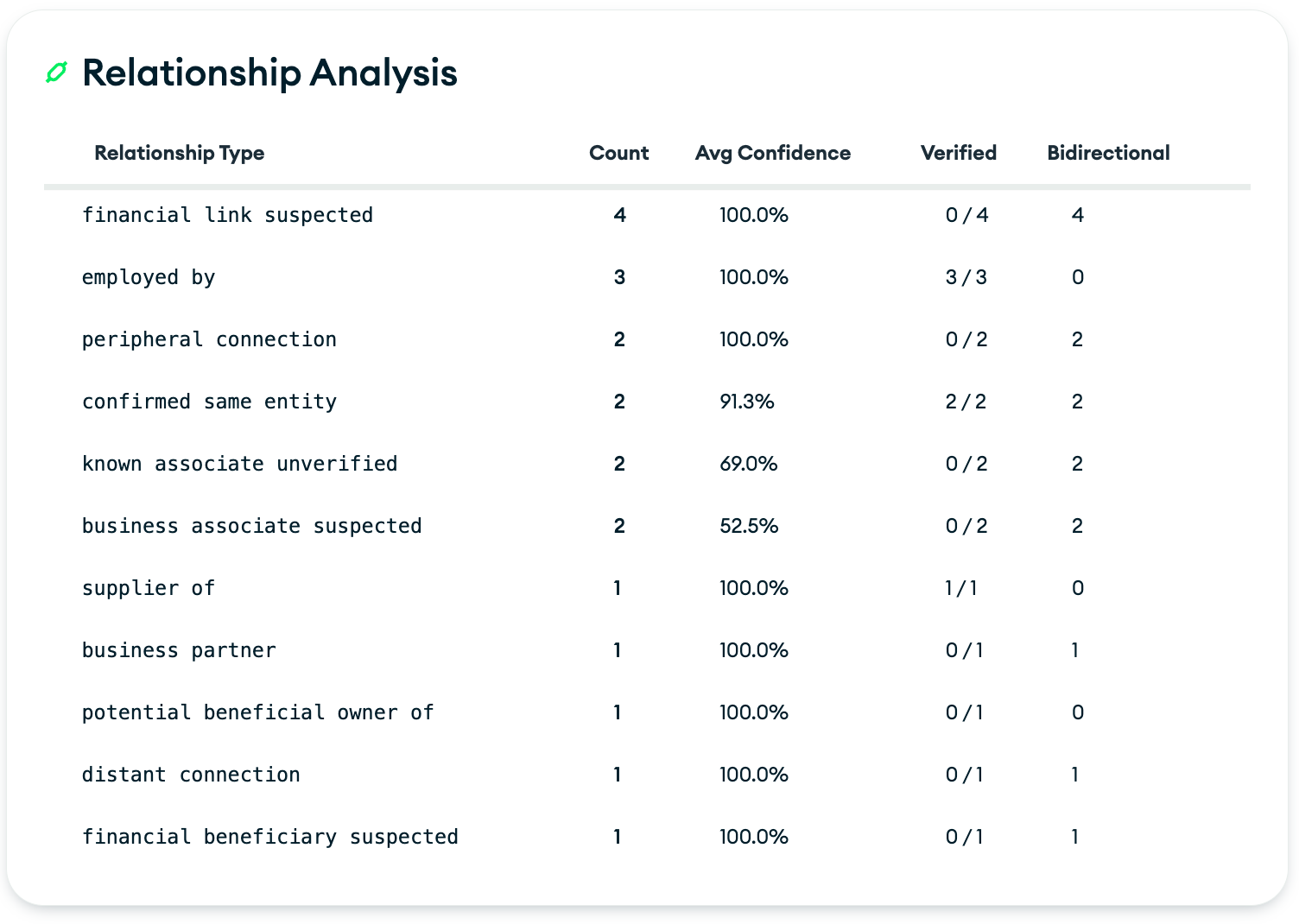
Sofort können Sie die verschiedenen möglichen Entitätsbeziehungen aufdecken, jede mit dem entsprechenden Vertrauensgrad.
Abbildung 5. Beispiel für die Beziehungsanalyse.
(Das Bild stammt von unserem Demo-Prototyp. Offenlegung: Das Erscheinungsbild stammt von einer benutzerdefinierten Benutzeroberfläche, die für Demozwecke entwickelt wurde. Es ist nicht Teil des MongoDB-Angebots.)
Diese Ergebnisse bilden die Grundlage für eine Verhaltensanalyse, die in einer Single View des Kundenprofils zusammengeführt wird.
Letzter Schritt: Aufbau einer einheitlichen Kundenansicht
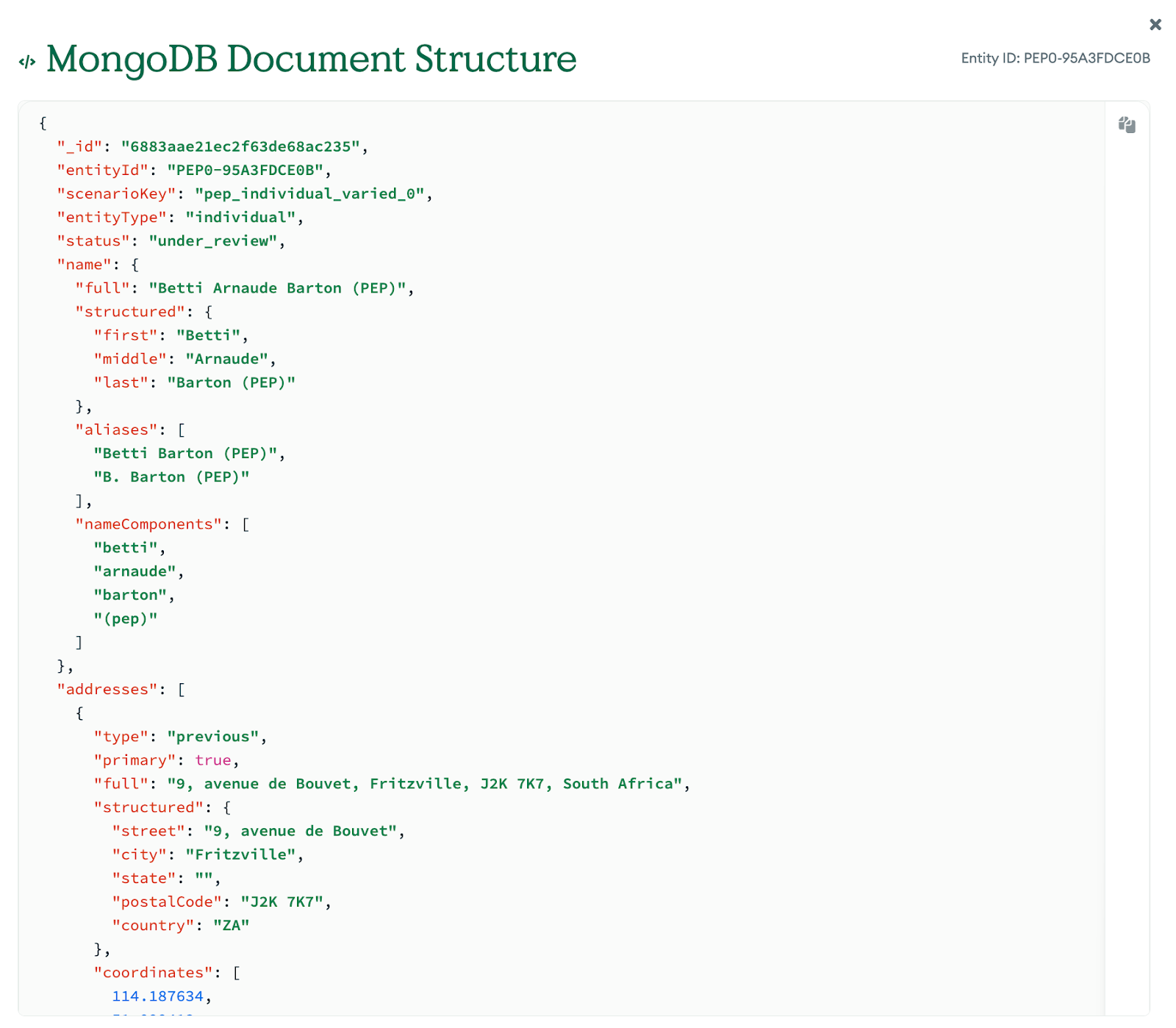
Nach der Erfassung dieser Datenpunkte besteht der letzte Schritt (vorerst) darin, sie zu einer Single View des Kundenprofils zusammenzuführen. Hier bietet das Datenmodell von MongoDB die erforderliche Flexibilität, um alle dynamischen Daten zu zentralisieren, die nicht nur einmal, sondern kontinuierlich erfasst werden.
Abbildung 6. Beispiel einer in der Dokumentenstruktur von MongoDB gespeicherten Entität.
(Das Bild stammt von unserem Demo-Prototyp. Offenlegung: Das Erscheinungsbild stammt von einer benutzerdefinierten Benutzeroberfläche, die für Demozwecke entwickelt wurde. Es ist nicht Teil des MongoDB-Angebots.)
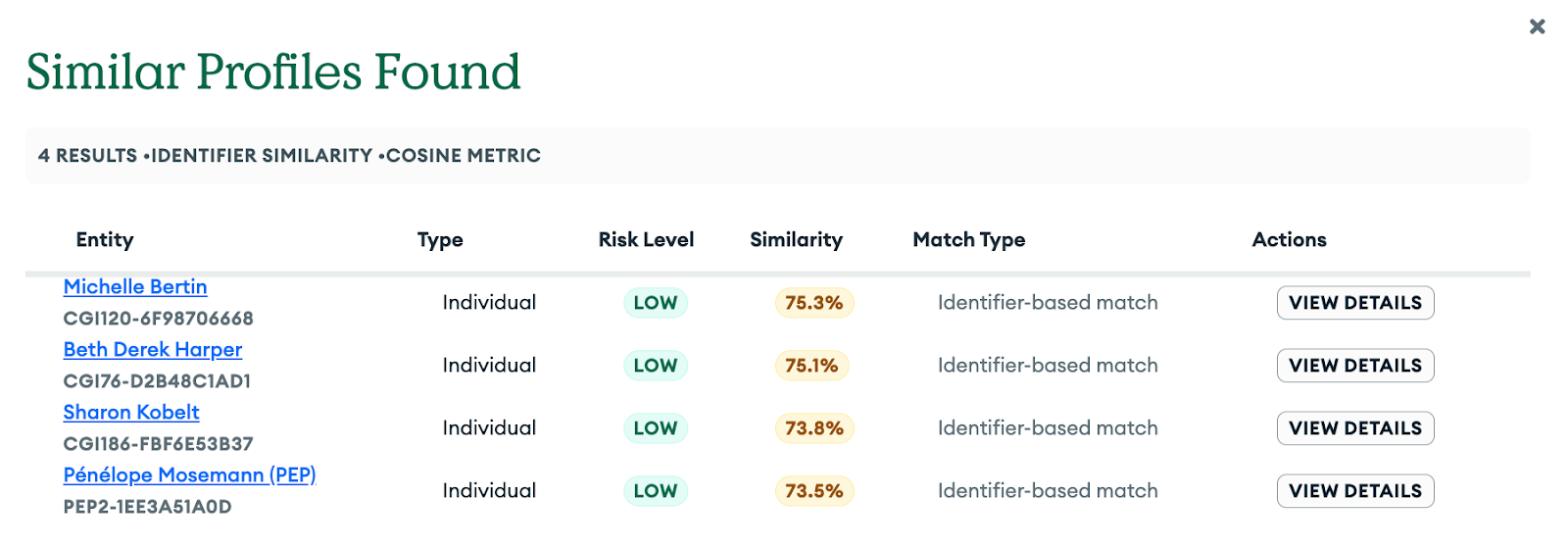
Das Datenmodell von MongoDB zeichnet sich in einem Single-View-Modell durch seine Fähigkeit aus, strukturierte Daten mit unstrukturierten Daten zu kombinieren, die potenziell neben einer vektorisierten Darstellung des Profils existieren können. Dies hilft dabei, ähnliche Profile zu finden und Kundenprofile effektiver zu clustern.
Abbildung 7. Beispiel für die Ergebnisse der Ähnlichkeitssuche.
(Das Bild stammt von unserem Demo-Prototyp. Offenlegung: Das Erscheinungsbild stammt von einer benutzerdefinierten Benutzeroberfläche, die für Demozwecke entwickelt wurde. Es ist nicht Teil des MongoDB-Angebots.)
Zusammenfassung
Das Onboarding eines neuen Unternehmens als Kunde (ob Privatperson oder Unternehmenskunde) erfordert eine moderne Datenplattform, die eingehende Daten aus verschiedenen Quellen, in unterschiedlichen Formaten und Schemata erfassen kann.
Der wichtigste Faktor für eine erfolgreiche Operation zur Bekämpfung der Finanzkriminalität ist der Aufbau eines dynamischen Kundenprofils. Daher ist die Erfassung und Verarbeitung aller möglichen Datenpunkte von entscheidender Bedeutung. Wir müssen auch die potenziellen Beziehungen des Unternehmens zu bestehenden Kunden oder zu bekannten Transaktionen verstehen. Hierfür können die Aggregationspipeline-Funktionen von MongoDB – wie die Erstellung eines „on-the-fly“-Netzwerkgraphen – bisher unmerkliche Verhaltensweisen aufdecken.
Schließlich müssen die Daten und Analysen in einer Single View zusammenlaufen. Hier ist die Flexibilität des Datenmodells von MongoDB ein entscheidender Faktor. Es kann strukturierte und unstrukturierte Daten in einer einzigen Instanz in großem Umfang speichern. Es kann diese Informationen auch mit einer vektorisierten Darstellung des Profils kombinieren, um Ähnlichkeitssuchen präzise durchzuführen.
Im nächsten Artikel dieser Reihe werden wir näher darauf eingehen, wie KI die Due-Diligence-Prozesse im Rahmen einer umfassenden Due Diligence unter Verwendung des Kundenverhaltensprofils verbessern kann. Bleiben Sie dran!
Wie geht es weiter?
Lesen Sie unseren Serienüberblick zum Aufbau einer Plattform zur Bekämpfung von Finanzkriminalität mit MongoDB.
Sehen Sie sich dieses geführte Schritt-für-Schritt-Tutorial zum Aufbau einer Plattform zur Bekämpfung von Finanzkriminalität mit MongoDB Atlas an.