Die architektonischen Wurzeln von Halluzinationen
Wenn ein LLM einen Datenpunkt, eine Entität oder eine Unternehmensrichtlinie erfindet, die in Wirklichkeit gar nicht existiert, liegt das fast immer daran, dass die Abruf-Pipeline, aus der die Eingabebefehle bezogen wurden, ungenau, veraltet oder unvollständig war. Es gibt einen präzisen Begriff für die Lücke zwischen einem System, das nur grundlegende Antworten liefert, und einem System, dessen Antworten in der Produktion zuverlässig umgesetzt werden können: die Vertrauenslücke.
Ein Agent, der auf der Grundlage eines Customer Snapshot von gestern Schlussfolgerungen zieht, oder ein Einbettungsmodell, das ohne erneute Verarbeitung der zugrunde liegenden Datensätze ausgetauscht wurde, stellt ein erhebliches betriebliches Risiko dar. Dabei wird kein offensichtlich falsches Ergebnis geliefert, sondern eine mit hoher Sicherheit vorgetäuschte Erkenntnis. Eine Halluzination in einer einzelnen Sandbox-Demo ist eine Kuriosität, doch derselbe Fehler, der sich auf Tausende von Live-Interaktionen pro Minute auswirkt, ist bereits ein Vorfall.
Einführung kontextueller Integrität
Genauigkeit ist eine grundlegende architektonische Eigenschaft, die am besten als kontextuelle Integrität definiert werden kann: Die Disziplin, Live-Betriebsdaten, Vektor-Embeddings, Suchindizes und den Agentenstatus automatisch konsistent zu halten, anstatt sie nachträglich manuell abzugleichen.
Wenn diese vier Variablen im selben zugrunde liegenden Datensatz enthalten sind, der über genau denselben Abfragepfad bereitgestellt wird, gibt es keinen Synchronisationsschritt, bei dem Genauigkeitsverluste auftreten könnten. Die vom Agenten empfangenen Daten basieren zuverlässig auf dem tatsächlichen Stand genau in der Millisekunde, in der sie ausgegeben wurden.
Die Modelle von Voyage AI führen den Retrieval Embedding Benchmark (RTEB) an und schneiden bei den RAG-Aufgaben, die Agenten in Unternehmen tatsächlich ausführen, besser ab als vergleichbare Modelle von Gemini, Cohere und OpenAI.
MongoDB hat die Bausteine bereitgestellt, die erforderlich sind, um die Vertrauenslücke nativ innerhalb der Datenschicht zu schließen:
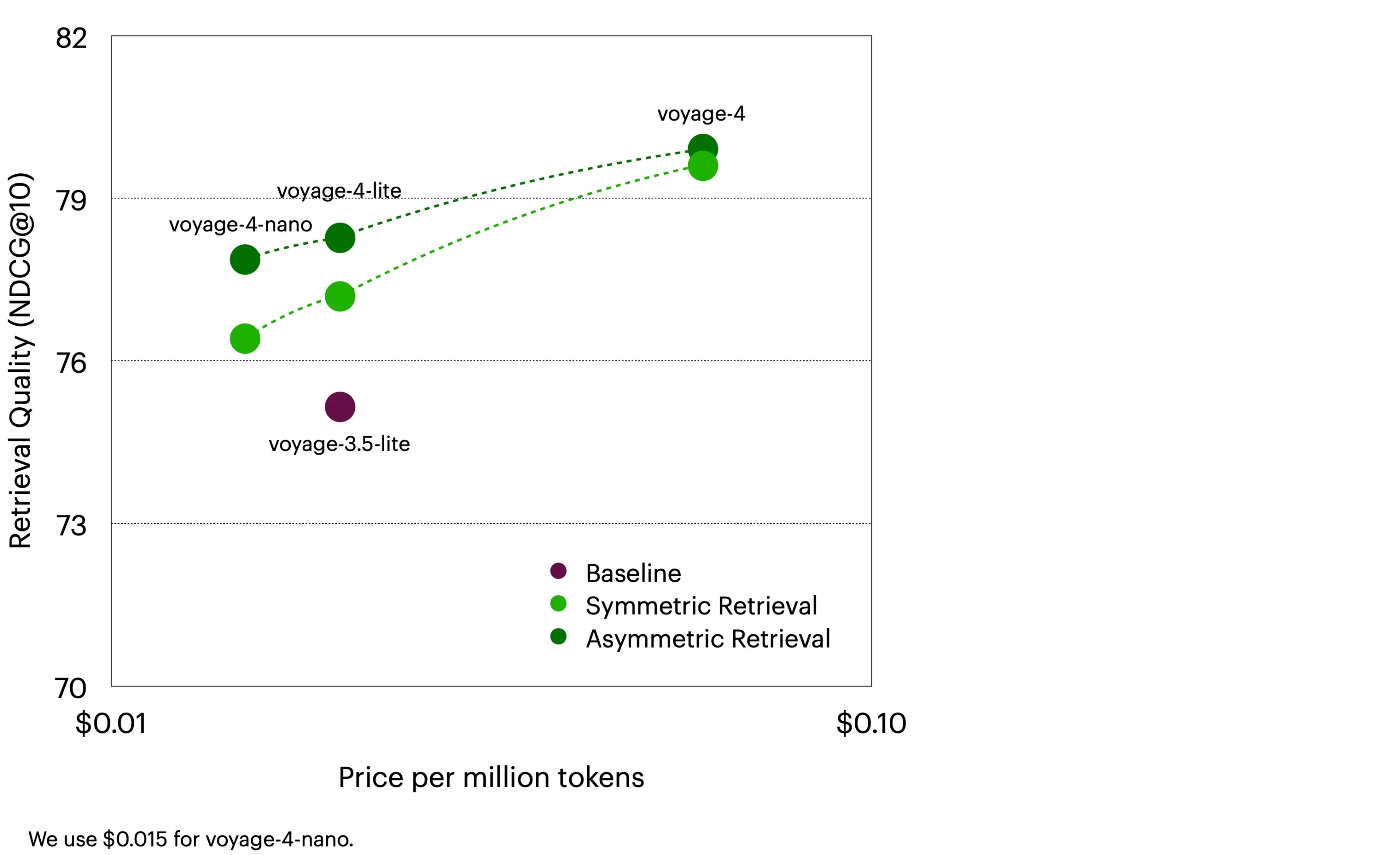
- Interoperabilität der Voyage-4-Serie: Eine Familie von Modellen mit gemeinsamem Einbettungsraum (voyage-4-large, voyage-4, voyage-4-lite, voyage-4-nano), die vollständig kompatible Einbettungen erzeugen. Das Flaggschiff „voyage-4-large“ ist das erste serienreife Embedding-Modell, das auf einer „Mixture-of-Experts“-Architektur (MoE) basiert und modernste Genauigkeit bei etwa 40 % geringeren Betriebskosten als vergleichbare dichte Modelle bietet. Dadurch entfällt die Notwendigkeit, ganze Datensätze neu zu verarbeiten, wenn sich Kosten- oder Latenzprofile ändern.
- Asymmetrische Abfrage: Eine Branchenneuheit, bei der Dokumente einmalig mit „voyage-4-large“ eingebettet werden, um eine maximale Basisgenauigkeit zu erzielen, während fortlaufende Abfragen mit „voyage-4-lite“ eingebettet werden, um die Latenz und die Token-Kosten niedrig zu halten.