Storing unstructured data is the first step of data analysis.
But what constitutes unstructured data? Is it really unstructured? Let’s take a closer look.
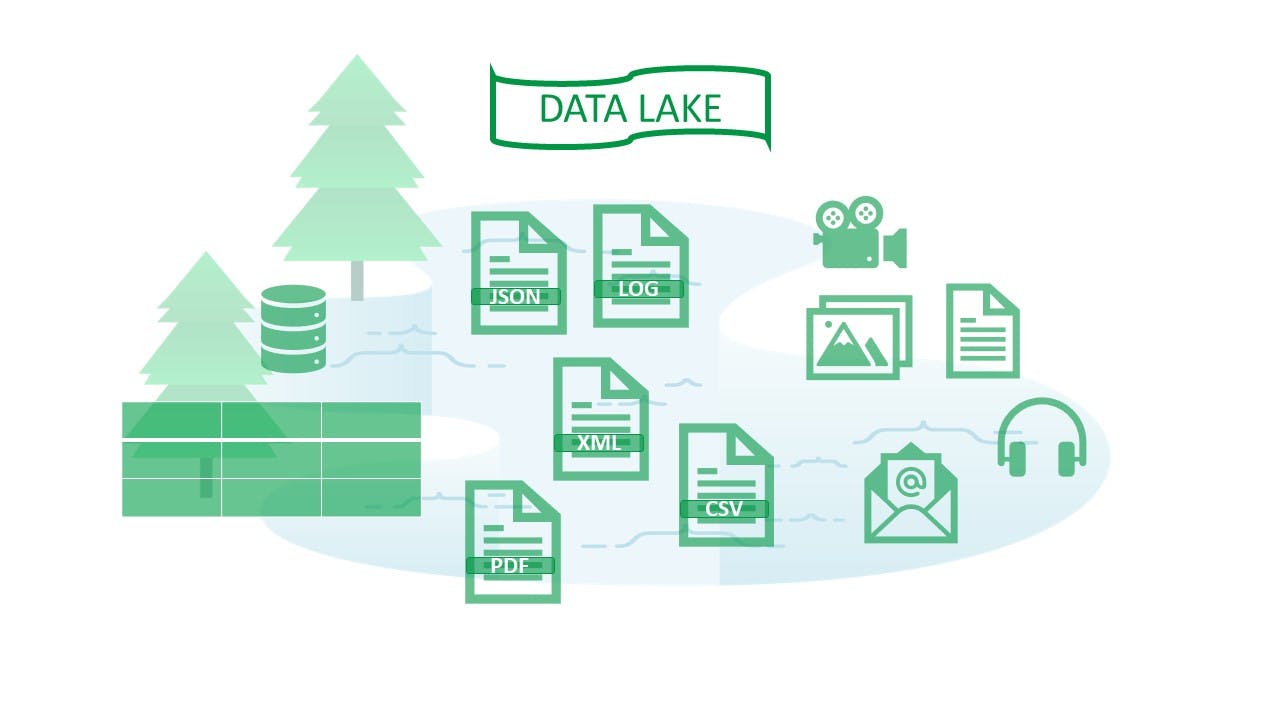
Although unstructured data has an internally predefined structure, it does not follow a fixed data model. Unstructured data may not always fit into a structure predefined by a structured database or data table. Here are some examples:
- Social media data—Social media text such as comments and feedback are unstructured, but social media data like friends, followers, and likes are structured.
- Email—The body copy is unstructured, whereas the “to,” “cc,” and “subject” fields are structured.
- Multimedia—This can be represented in multiple ways, including vectors, bitmaps, GIFs, frames, and so on, making them unstructured.
Unstructured data forms about 80% of big data. Businesses use various unstructured data analysis techniques and tools to get insights from unstructured data. However, storing unstructured big data is complex because of its usually high volume, variety, and velocity.
In this article, we’ll discuss: