


INTRODUCTION
The backbone of local communities
In many ways, community banks are the backbone of the US financial services system. Typically focusing on smaller, local markets and operating from just a few locations, around 95% of banks in the United States fall into the “community bank” category.
It is their relatively small size (less than $10 billion in assets), traditional product offerings, and geographic reach that creates a point of difference. Community banks are pillars of a local community, playing an outsized role in lending to local businesses, families, and homeowners. Indeed, many community banks were the first to step up with local support during COVID-19 before their national competitors.
However, as banking becomes increasingly digital, community banks face new competitive threats. Typically, community banks lack the IT resources of major national or regional operators, often relying on legacy technology. Many are unable to access the benefits of cutting-edge analytics and data mining. Worryingly, they are often underserved or overlooked by global fintech operators.
THE CHALLENGE
Enabling access to critical competitive data
The fact that community banks operate on a smaller scale to national rivals should not undermine the importance of data. If anything, data becomes more important. Greater insight into real-time data enables community banks to be more local and more personal.
Neocova, a fintech start-up based in Austin, Texas, aims to address this glaring gap. It wants to help community banks leverage data to drive improved outcomes for themselves and their customers.
“We saw a huge opportunity to modernize data and the accessibility of data for community banks,” says Matt Beecher, CEO at Neocova. “Our focus has been to build a modern data and analytics platform uniquely structured for those banks whose customers could be small to medium-size businesses, established companies, or ordinary people.”
Many community banks have, what Matt Almeida, Vice President of Engineering at Neocova, describes as “messy data,” the result of randomly adding tables to existing normalized databases.
“What works for one bank in extracting a piece of data may not work for another because it can be a totally different structural framework,” he says. “It’s the problem we aim to solve.”
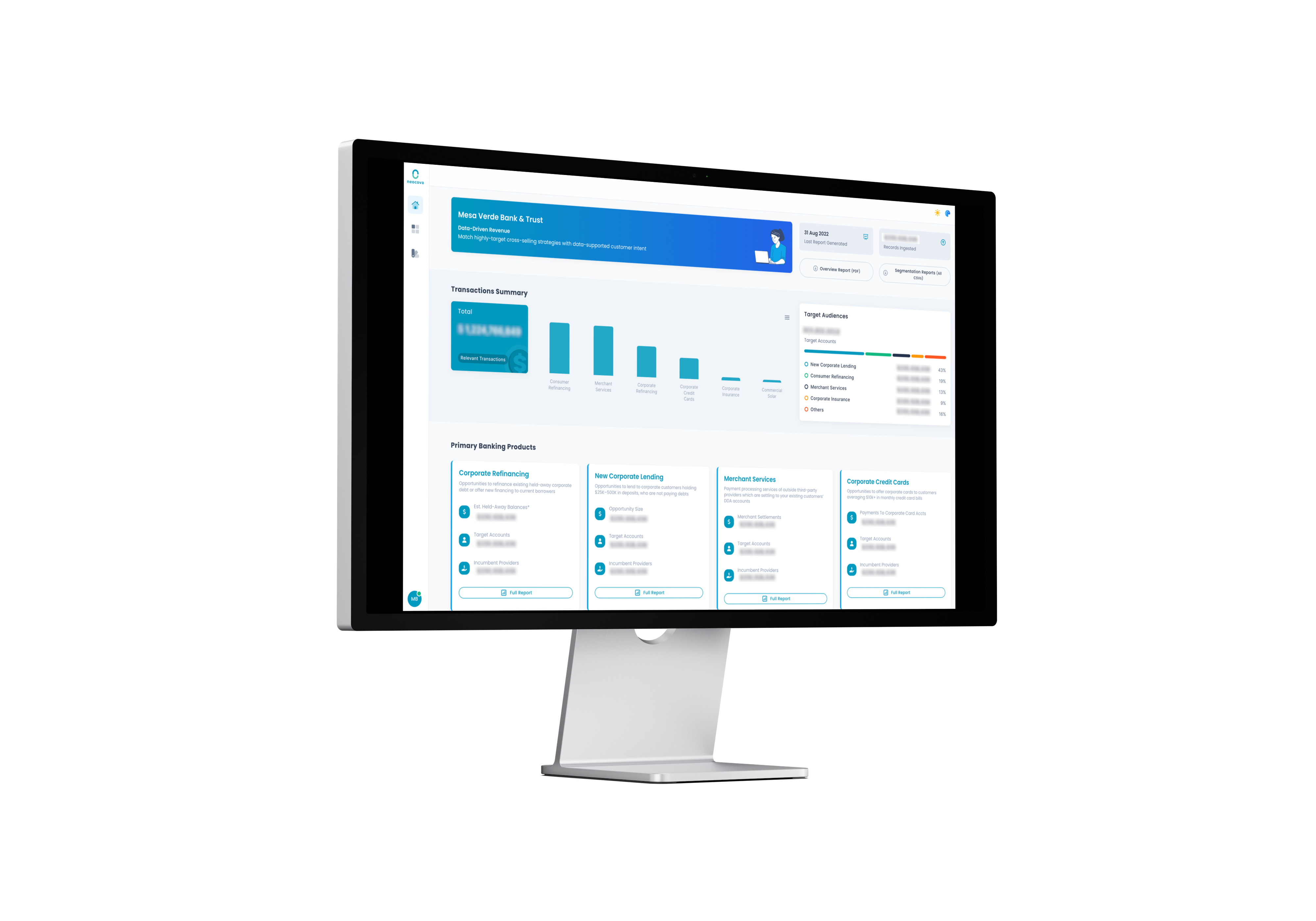
To reimagine data possibilities in the community banking sector, Neocova needed a solution that would allow it to ingest data from multiple sources in multiple structures. It then needed to build a front-end environment to provide banks with access to the insights buried within.
THE SOLUTION
Establishing a flexible, distributed, document-store database
As they searched for a solution, Neocova was already familiar with MongoDB, as many on the team had used Atlas in previous roles. Almeida says MongoDB Atlas—a modern, multi-cloud database platform—offered a set of clear answers to the requirements Neocova was looking for:
“We needed a flexible, distributed, document-store database with good community support. The decision to use MongoDB Atlas was one of the earliest pieces of infrastructure we agreed upon. It was highly recommended by our cloud architects, it provided exceptional levels of security and data isolation, and displayed ease of use when plugged into other cloud resources.“
MongoDB Compass then provided a perfect complement to Atlas, Almeida adds: “Atlas is in a class of its own in terms of stability, performance, maintainability, and its tool and feature set. Compass is a phenomenal GUI for when we need to do something more complicated with any dataset. Maintaining data isolation between customers is incredibly simple to manage. Switching between different customer clusters is like second nature with the native UX.”
_1.svg)