


INTRODUCTION
The world’s digital stadium
Fanatiz is one of the fastest-growing sports streaming platforms in the world. It has tens of thousands of subscribers and is particularly popular with expats, who can stream their team’s games in real time or catch up on-demand wherever they are. That wouldn’t be possible without 1190 Sports, which manages and commercializes sports rights, or Nunchee, the white-label technology behind direct-to-consumer streaming services.
The businesses are owned and run by Fz Sports, which has 85 staff in offices across Latin America, Europe, and the United States. It streams around 10,000 games each year, which amounts to around 20 per day.
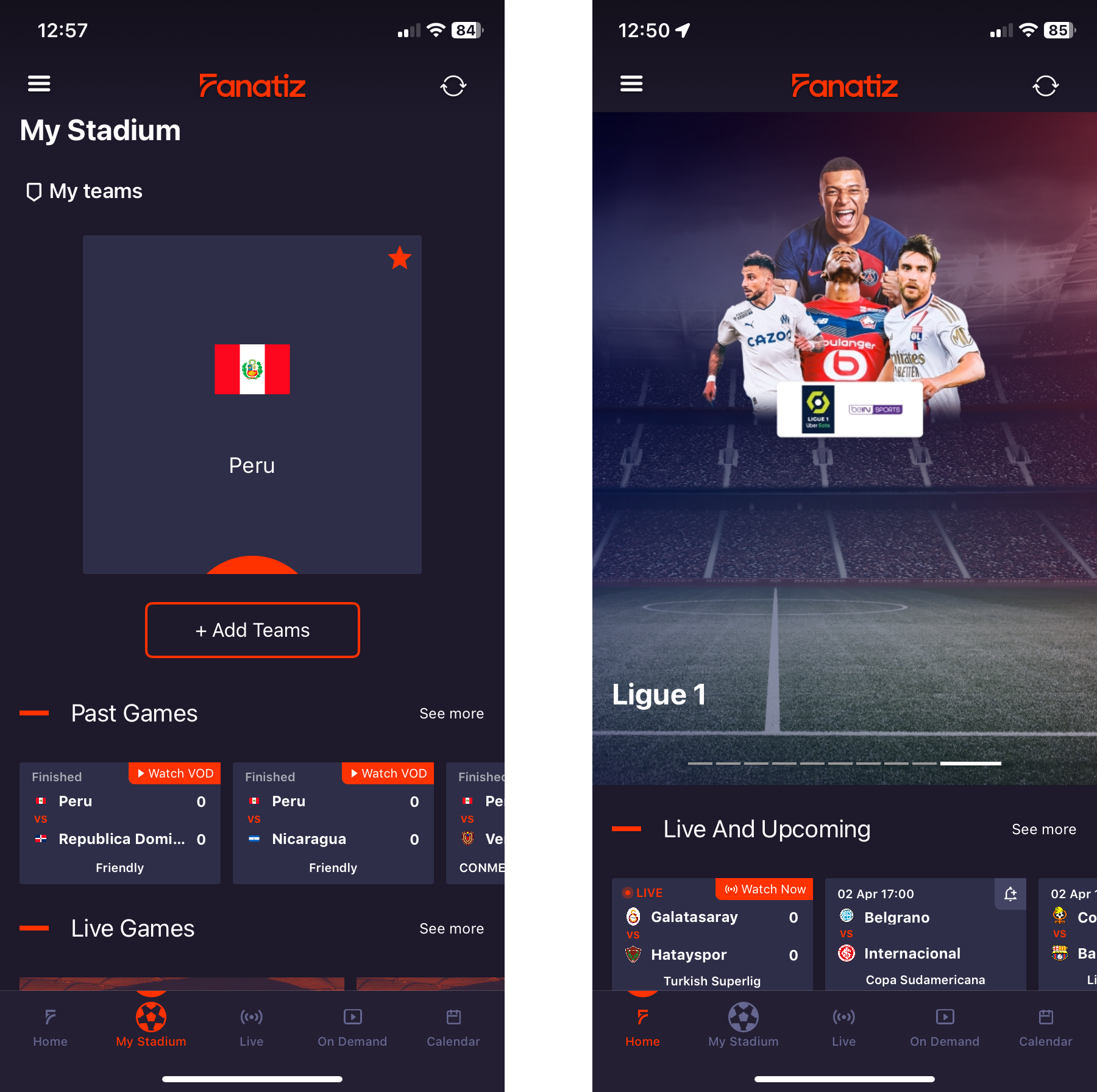
“We want to be the largest digital stadium in the world. Our subscribers mainly follow men’s and women’s soccer, but we also stream basketball, handball, golf, and other sports,” reveals Damian Krynveniuk, vice president of engineering and technical operations at Fz Sports.
To connect sports fans with the content they love, Fz Sports is a fast adopter of new technologies, and all three of its businesses are underpinned by cutting-edge technology and a culture of innovation. “We’re optimizing the whole sports value chain, reinventing the way rights holders, brands, and fans connect with each other, and plan on becoming the leading digital destination for enjoying and monetizing sporting content,” adds Krynveniuk.
THE CHALLENGE
Simultaneous streaming with zero downtime
When it comes to live events, scalability is a universal challenge. In soccer alone, there can be up to 30 matches happening simultaneously. Systems need to be ready to handle exponential surges in demand without a hitch.
“If your system goes down in the middle of a game, you risk losing subscribers. Their loyalty is with their team, not their streaming platform,” says Krynveniuk. “We need to be able to stream uninterrupted in real time and manage peaks in traffic.” But having spare capacity isn’t a luxury that many can afford, so it was imperative for Fz Sports to find a high performing database platform to support its business.
The company built a minimum viable product with the technology it knew best — relational databases. However, it quickly ran into challenges around scalability and versatility, and the developer team was losing too much time on manual maintenance.
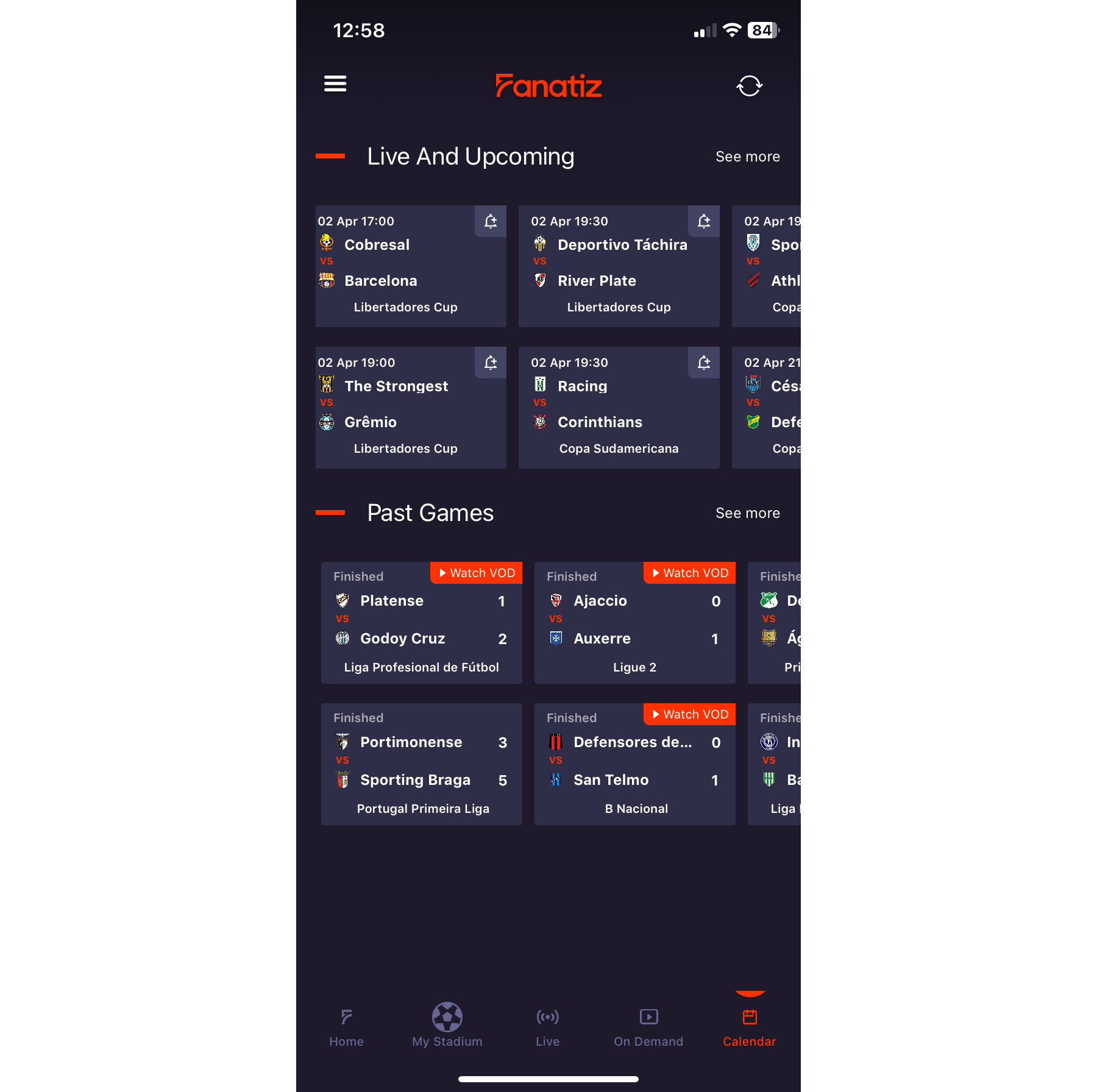
Fz Sports makes content available in multiple regions and across any device — from wearables and smartphones to web browsers and connected TVs. This level of complexity requires a flexible database that can handle unstructured data and make it easy to navigate. Subscribers should be able to find the sports they want to watch quickly and easily, whether they’re watching live or browsing the archives.
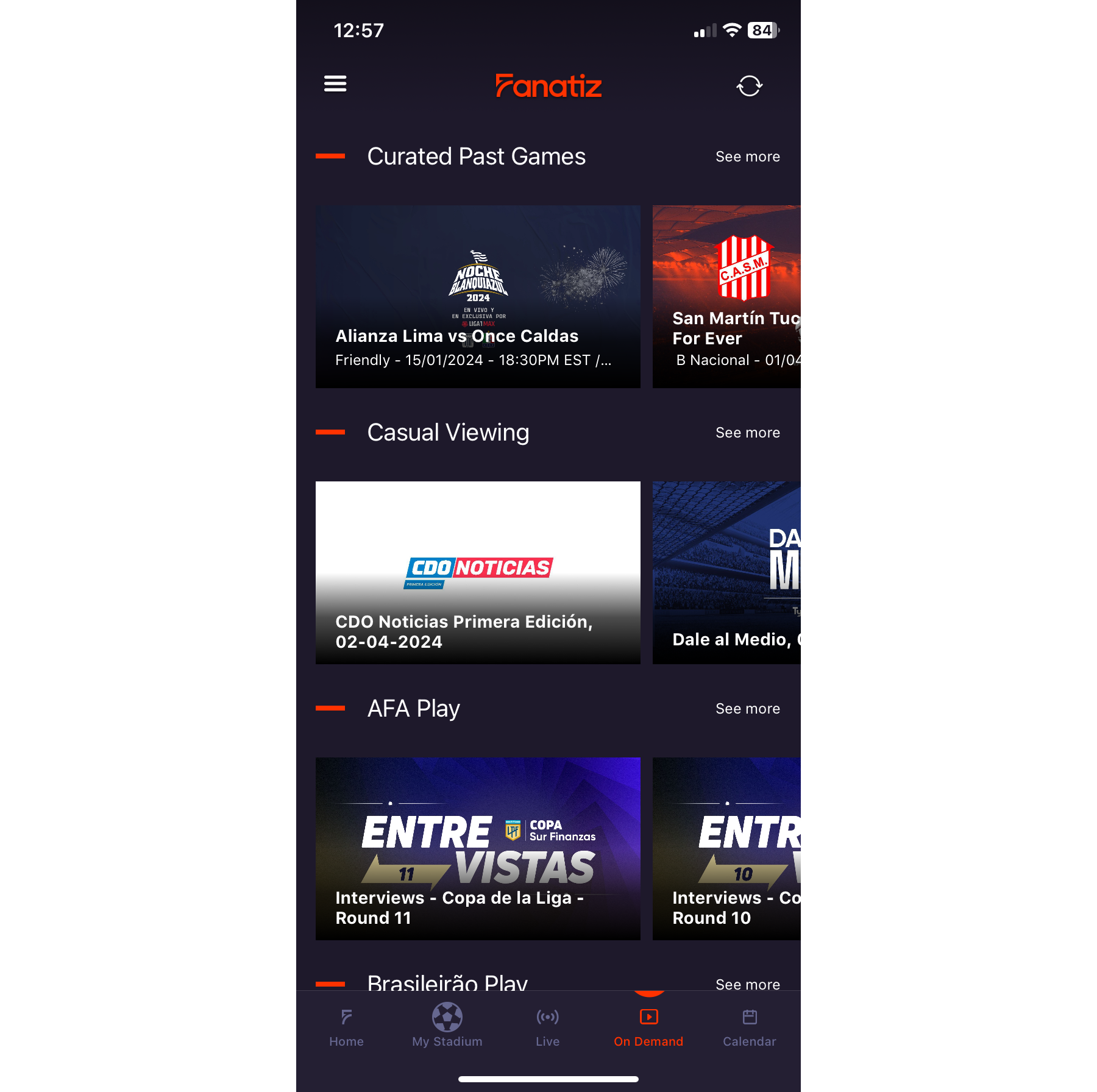
There’s also an opportunity to give them a better, more advanced user experience. As Krynveniuk explains, “Your favorite player might be on Brazil’s national soccer team but play regularly for a team in the UK. We want to know what makes our viewers tick so we can serve more relevant content, recommending friendly matches as well as league games, for example.”
THE SOLUTION
A feature-rich managed database platform
Fz Sports began looking for a non-relational database that supports unstructured data and can grow and adapt in line with its business. “We were looking for a light, user-friendly database that was compatible with Javascript, microservices, and AWS. When we went to market, the best database to handle high volumes of traffic was MongoDB,” says Krynveniuk.
The team adopted a MERN stack; a web development framework made up of MongoDB, Express.js, React.js, and Node.js. MongoDB acts as the database layer, with Express and Node drivers in the middle as the application layer, and React on top to create the presentation layer. The advantage of this approach is that developers can create full-stack solutions using a standard methodology and core digital foundation.
Initially, Fz Sports implemented the MongoDB Community edition and had a dedicated team managing 12 databases. While this was a pivotal step on the journey from a relational to non-relational way of working, it wasn’t the final destination. As Krynveniuk explains; ”MongoDB Community was an excellent tool to start with, but we felt limited by the hands-on management. We had one full-time employee solely focused on database management when we’d rather have staff working on improving the subscriber experience and interface.”
The team decided to move to MongoDB Atlas, a fully managed database service that includes support and best practice guidance, as well as better dashboards, metrics, and tools to optimize performance. “We take a strategic view of optimization, focusing on projects that will have the biggest impact. For example, we worked with MongoDB on a month-long project to reorganize our authorization database and increased performance by 100% as a result,” recalls Krynveniuk. “That was down to having an unstructured database and great support from MongoDB engineers.”

_1.svg)