

THEIR CHALLENGE
Digitizing a complex, analog industry
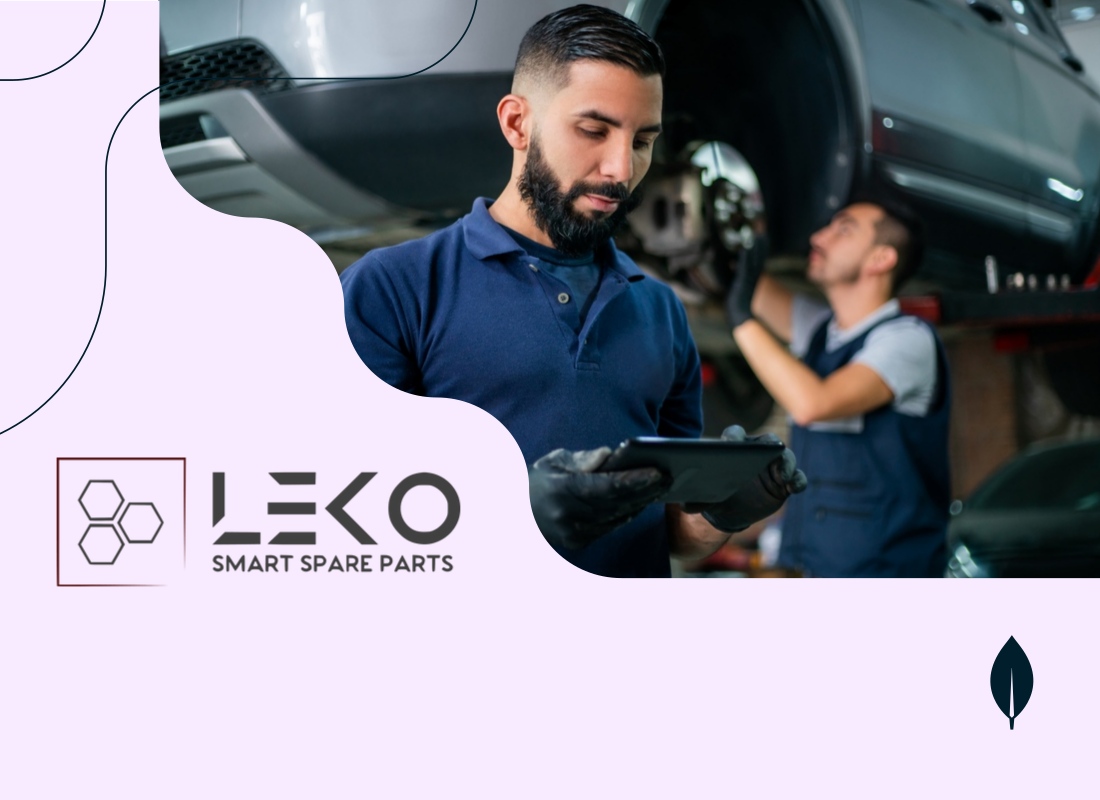
For the founders of LekoTech, an automotive startup initially launched in Albania, the mission was simple yet ambitious: to digitize the traditionally highly analog ecosystem of spare parts.
The goal was to make every vehicle owner's life easier by creating the industry’s largest dataset of car parts. More importantly, LekoTech aimed to advance the circular economy by focusing exclusively on original equipment manufacturer (OEM) parts, which are manufactured to last a lifetime.
“LekoTech’s primary aim is to help breakers and dismantlers manage parts and inventories digitally,” said Nikolin Ngjela, CTO and Co-founder at LekoTech. “Our Fleet Management app is a consumer-oriented layer that lets vehicle owners and fleet operators access that data for everyday maintenance and parts sourcing.”
By encouraging dismantlers to “reduce, reuse, and recycle,” the company aims to significantly cut global carbon emissions and reduce the environmental damage caused by counterfeit and discarded parts. However, aggregating resale inventory in this sector is highly complex: a single spare part can fit anywhere between 10 and 50 specific vehicle models, creating huge amounts of metadata that must be instantly searchable against hundreds of car configurations, marketplace listings, and warehouse locations.
The industry is also highly traditional; typical customers can be third-generation, family-owned breakers’ yards with millions of parts but relatively little technological know-how.
“Dismantlers often don’t have a close connection with technology,” explained Ngjela. “One of our biggest struggles as a startup was to both educate them and make our system easy to use.”
To make this vast, fragmented catalog accessible to buyers and fleet operators, speed is paramount. LekoTech previously struggled with search latencies of up to 35 seconds, a delay that risked losing potential buyers to competitors if they couldn’t instantly confirm a part’s price and availability.
Furthermore, because users search for parts using highly variable terminology—ranging from exact OEM codes to natural language descriptions—LekoTech needed a robust infrastructure capable of handling high levels of data variability, while scaling rapidly across Europe.
“The smallest details in components often make the biggest difference,” said Ngjela. “And you often don’t see the differences until a mechanic removes them. That’s the level of ambiguity that we need to manage.”


_1.svg)