


INTRODUCTION
A challenging and demanding market
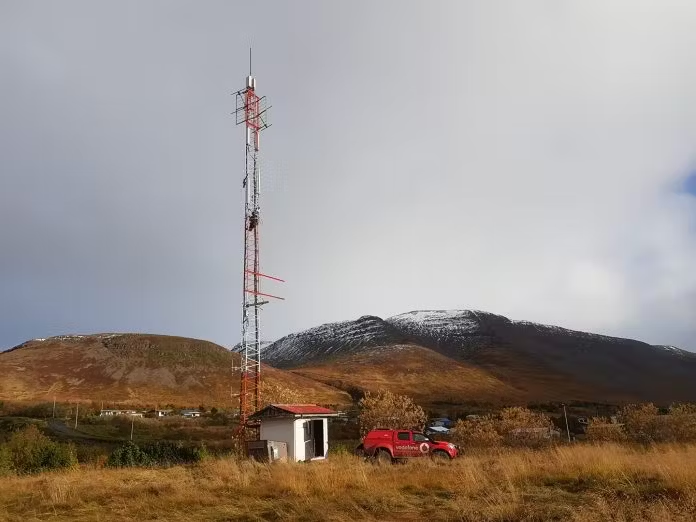
Iceland isn’t like other countries. Its dramatic, and often unforgiving, terrain is only about half the size of the UK, but its population is just 365,000. And this is a population that, despite the challenging environment, enjoys high-end telecoms and online services. The country has 90% 4G cellular coverage, which may seem like a great achievement, but it’s no less than the market demands – and expects.
“It’s the only country where the wind comes from all directions at once,” observes Birkir Björnsson, Director of Information technology at Icelandic media and telecoms operator, Sýn. “You can turn around but you’re always working against it. These are the natural challenges that shape us!”
THE CHALLENGE
Connecting processes, connecting customers
The product of multiple mergers of smaller companies, Sýn is Iceland’s second-largest – and largest privately owned – telecommunications company. It runs the country’s most extensive private radio stations and TV network, and under its Vodafone operation, the second-largest telecoms operator. Sýn’s offering is expanding continually – but so are those of its competitors.
When Björnsson and his colleague, Enterprise Architect David Fannar Gunnarsson, joined the business in 2020, some critical issues were visible immediately. “We had a complex and fully customized system landscape with 16 developers,” explains Björnsson. “But we spent around 60% of our time in operations, running processes we had already created. That model couldn’t take us any further.”
Sýn’s service agents were using an average of 50 systems a day. Processes were disconnected, and customers were feeling the effects; billing issues were damaging trust to the extent that Sýn’s NPS score was negative, while its complex product offerings – both B2B and B2C – were cumbersome and confusing. “You don’t really want to think too much about your telco or internet provider. You just want it to work, like water from a tap,” says Björnsson. “Our systems weren’t up to the job. We had every possible signal that change was needed, including from the chair of the board, but to actually change would be a huge strategic project.”
Then came what Björnsson describes as the “big bang”: Sýn’s Kubernetes cluster suffered a catastrophic failure. Suddenly, the business’s very existence was under threat.

_1.svg)