PLN Icon Plus, a subsidiary of Indonesia’s state-owned electricity company PT Perusahaan Listrik Negara (PLN), is at the forefront of Indonesia’s transition toward green, sustainable, and digitally-driven energy solutions.
At the core of this transformation is the country’s Meter Data Management System (MDMS). MDMS is an advanced software platform that serves as the backbone for analyzing the vast amounts of data generated by electricity meters. Complementing the MDMS is PLN’s Advanced Metering Infrastructure (AMI), an ecosystem of smart meters, communication technologies, platforms, and systems.
Together, these systems enable PLN to measure, monitor, and optimize energy delivery for users all across Indonesia. PLN has already scaled its installation to 1.2 million meters in 2024, representing 124 million transactions and 9TB of data daily. It plans to connect a total of 13.1 million smart meters onto the MDMS by 2029.
To achieve this, the modernization of PLN’s legacy infrastructure was paramount, which PLN accomplished by working with MongoDB.
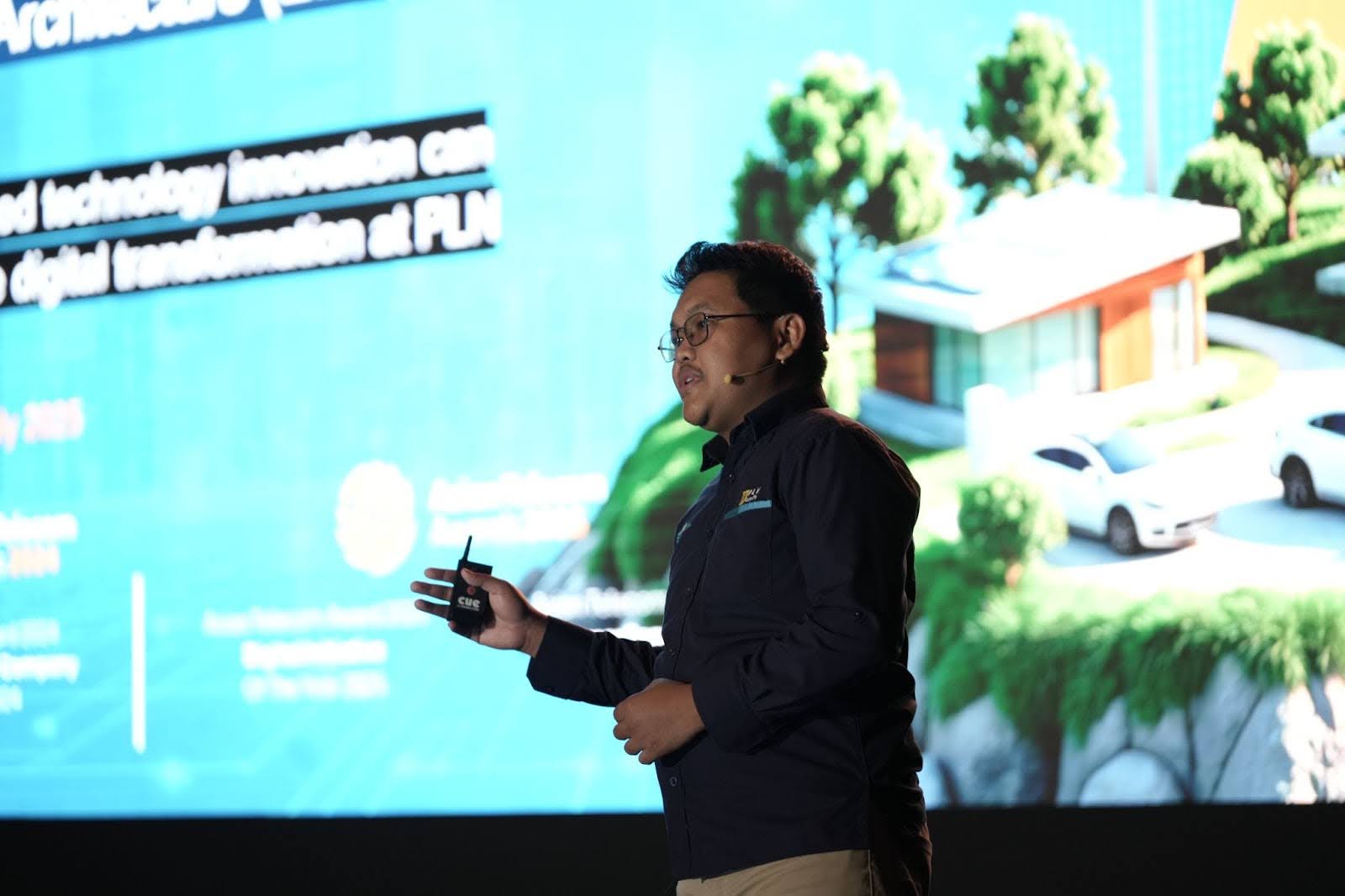
PLN’s relational database model not fit for scale and flexibility
PLN’s metering system transformation journey started in 2014. Back then, it relied on an Automatic Meter Reading (AMR) system, which was supported by a rigid, monolithic architecture powered by relational databases. However, in 2019, Indonesia’s Meter Data Management System was created, which led PLN to further scale its Advanced Metering Infrastructure. This surfaced critical bottlenecks with the existing legacy technology:
- Scalability limitations for high transaction volumes: The MDMS was already connected to 400 smart meters and handled millions of transactions daily. However, this was far from the smart meters target it was aiming for—the MDMS had to ensure it could scale to connect and manage 13.1 million smart meters by 2029, each generating millions of transactions per day.
- Rigidity and inflexibility inhibited handling diverse, dynamic data formats: Each transaction from the smart meters included many variables, including load profiles (24 variables every 15 minutes), instantaneous readings (62 variables every 12 hours), end-of-billing cycle data (72 variables monthly), and more. Furthermore, meters from various suppliers and technologies produce varied data interactions and formats, complicating the ingestion process. PLN’s legacy database was not equipped to handle such complexity. The system mandated predefined schemas that limited flexibility and inhibited integration workflows.
- Limited write performance: The MDMS required a database capable of handling heavy and intensive write transactions with high speed and low latency. With highly dynamic data payloads and intensive write operations, the legacy relational databases failed to deliver the performance and responsiveness necessary for such a mission-critical system.
- High cost of operations: As the number of meters grew, so did the cost of maintaining and operating the infrastructure. It was critical for PLN to run its data infrastructure with cost efficiency in mind.
- Reliability: The critical nature of energy services meant that PLN had to operate in a zero-downtime environment. This required a database that could offer high availability and redundancy.
To address the limitations of this legacy infrastructure and continue scaling, PLN chose MongoDB.
MongoDB powers growth, performance, and real-time insights
Migrating from a monolithic architecture to a microservices ecosystem with MongoDB Enterprise Advanced enabled PLN to embrace an event-driven approach for handling data transactions.
PLN deployed a single MongoDB server in 2019 to drive the proof-of-concept tests across the initial 400 smart meters. A year later, it transitioned to a three-node replica set architecture to demonstrate high availability and reliability. In 2021, as the AMI’s pre-commercial phase kicked off, PLN adopted a two-data-center strategy. This involved deploying MongoDB across two sites for fault tolerance. Finally, in 2023, PLN migrated to sharded clusters to enable horizontal scalability. This was a part of the AMI proof of reliability phase that enabled the system to handle even larger amounts of data and transaction growth seamlessly.
MongoDB’s flexible schema was crucial for integrating diverse data schemas from various third-party technology providers and unlocking rapid prototyping. MongoDB’s architecture was also able to support the intensive write operations from the growing number of smart meters.
PLN relies on MongoDB’s advanced functionalities, including bucket patterns, computation patterns, and aggregation pipelines. Such capabilities enable efficient in-memory computation, indexing, data filtering, and query optimization, ensuring the scalability and performance requirements for critical operations.
Additionally, PLN is exploring capabilities for enriched analytics via MongoDB's native support for time-series data. These time-series capabilities will also enable seamless handling of timestamped meter readings.
Another key component to PLN’s digital transformation success is MongoDB Ops Manager, which automates critical operations like deployment, monitoring, and backups. It also helped deliver enterprise-grade security for sensitive energy data. Continuous backups with point-in-time recovery minimize risks and ensure data integrity, while performance monitoring capabilities provide insights to ensure optimal database operation.
Scalability, efficiency, and reliability unlocked
The adoption of MongoDB has enabled PLN to achieve significant outcomes:
Zero downtime: MongoDB’s high availability features, such as replication, ensure the MDMS operates flawlessly even under heavy loads.
Scale: MongoDB enabled PLN to scale its installation from 120K smart meters during the pre-commercial phase, to 1.2 million meters under active commercial deployment in 2024—this represents 124 million transactions and 9 TB of data daily.
Cost efficiency: PLN achieved a 5.39% reduction in operating costs, saving IDR 1.6 billion (approx. US$95,500) through reliable remote operation. It also achieved a 56.56% cost efficiency in data acquisition, reducing costs by IDR 26.655 billion (approx. US$1.6million).
Energy savings: The MDMS saved over 7.015 million kWh of unsold energy by detecting violations and tracking energy usage more accurately.
Looking forward, PLN is focused on further scaling its Advanced Metering Infrastructure across Indonesia and installing 13.1 million smart meters by 2029. To achieve this vision, PLN plans to further explore MongoDB’s capabilities—these include advanced analytics to unlock new opportunities for real-time monitoring, AI-driven decision-making, and customer-centric services such as prepaid metering systems.

Next steps
Learn more about MongoDB Enterprise Advanced.