Most operating systems, database management systems, web servers, version control systems, cloud services, container services, programming languages, text editors, and development, network, monitoring, performance, and security tools provide a command line interface that is accessed via a terminal window. Some commonly used command line tools (in a POSIX system) are:
- ls — lists all the files and directories in a directory.
- cd — changes the current working directory.
- cp — copies files or directories to another location.
- ssh — logs into a remote server securely and executes commands for the remote server.
These can be used in scripts, which can then be tested, distributed, and customized, making them reusable components for admins and developers.
Operating system
Unix-like operating systems (like Linux) and macOS use the shell, where we can use the command line tools like ls, cd, mkdir, and many more. Some common Unix shells are bash and zsh.
Microsoft Windows uses “Command Prompt” and PowerShell as the command line interface.
Database management systems
Database management systems like MongoDB, MySQL, Oracle, and PostgreSQL provide CLI tools to administer and query data.
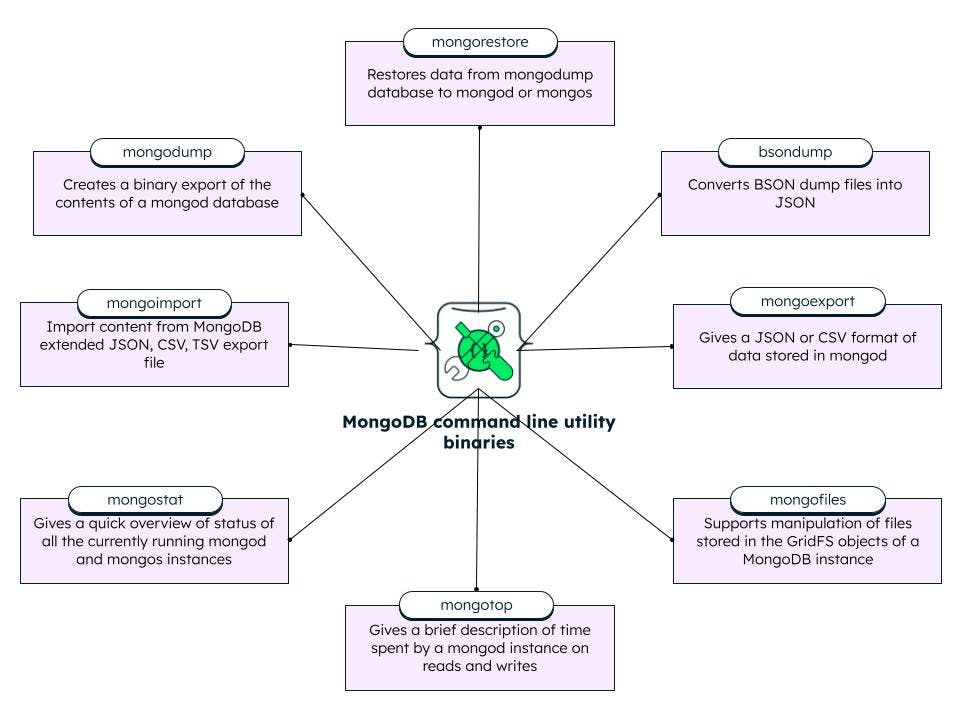
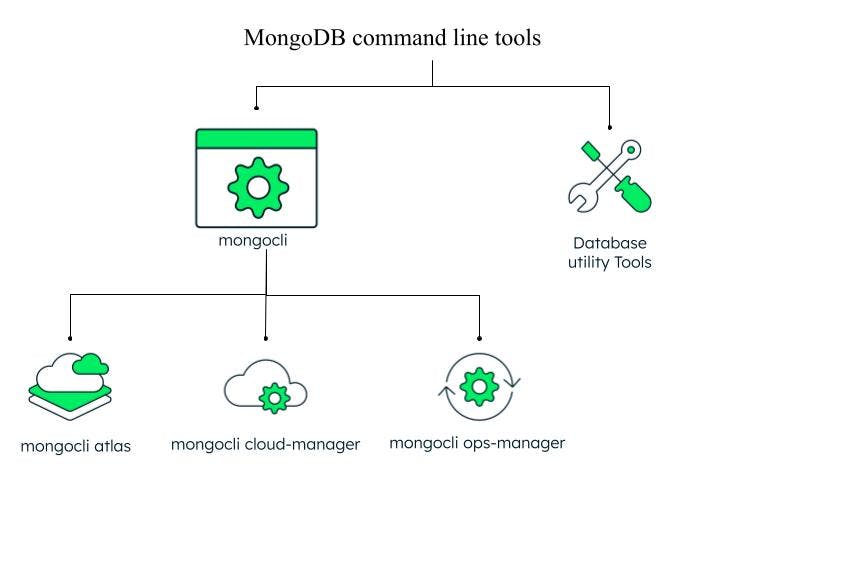
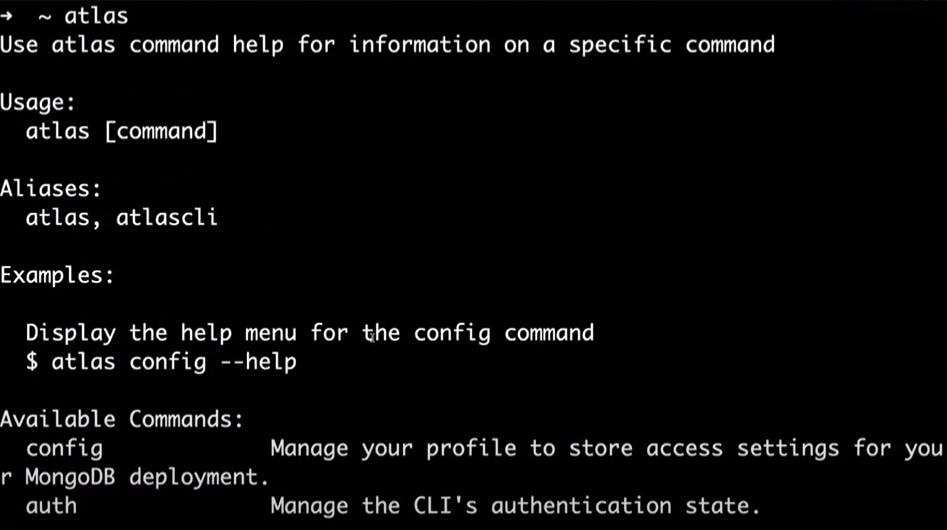
MongoDB Atlas, MongoDB’s intelligent data platform, provides a CLI tool, “mongocli,” to interact with Atlas resources from the command line interface. MongoDB also provides database utilities and other CLI tools, like mongosh (MongoDB Shell), and utilities like mongodump, mongorestore, and many more to effectively manage, monitor, and back up database deployments through a command line interface.
Web servers
Web servers provide command line tools for configuration and server management. Examples are apachectl for Apache and nginx for Nginx.
Version control systems
Git, one of the most popular version control systems, has a command line interface to manage source code.
Cloud service providers
Popular cloud service providers like AWS (AWS CLI), Azure (az), and Google Cloud (gcloud) provide command line tools to automate cloud operations and configure and manage cloud infrastructure and resources. These cloud providers can leverage MongoDB Cloud Manager to monitor, manage, and automate MongoDB deployments on their infrastructure.