How does container orchestration work?
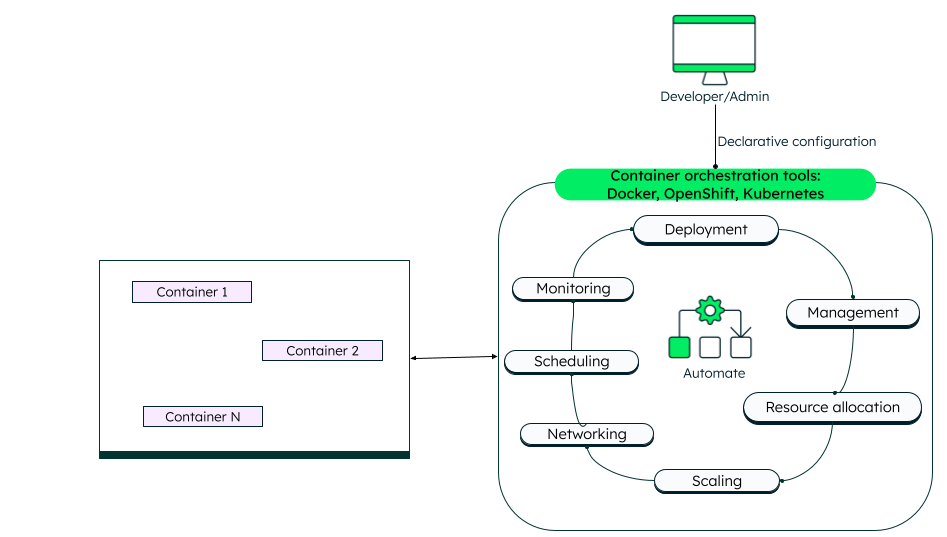
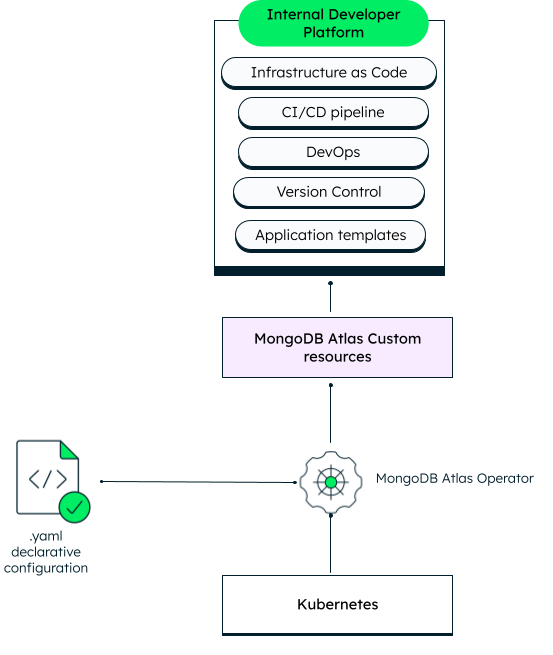
Developers or system administrators write a declarative configuration (e.g., in, .yaml or .json) that define the desired state of the application environment.
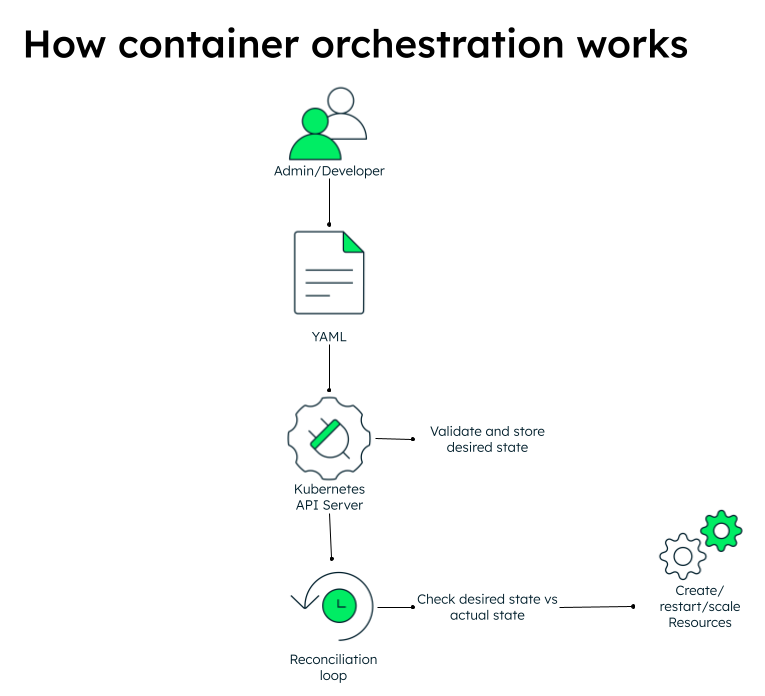
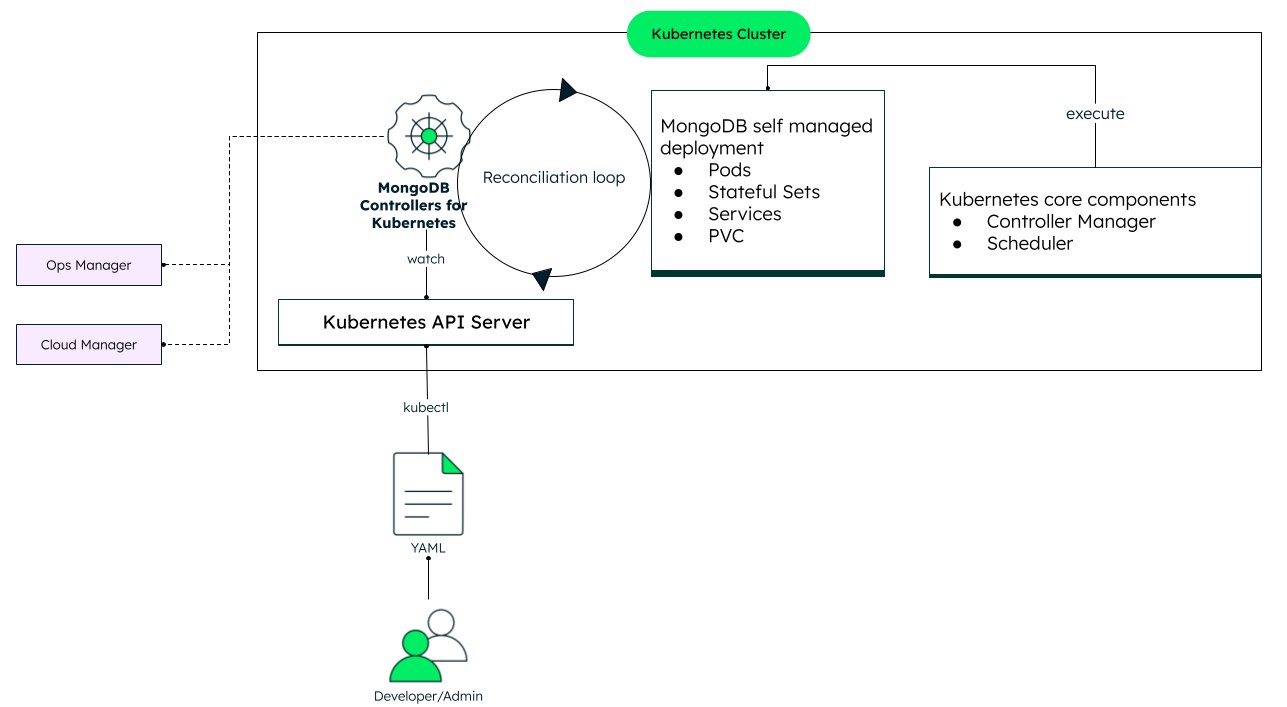
Container orchestration platforms continuously compare the declared state with the actual running state running in the cluster. In Kubernetes, this configuration is submitted to the Kubernetes API server, which validates and stores the desired state in the cluster. Controllers continuously monitor these resources through a reconciliation loop, comparing the desired state defined in the configuration with the actual state running in the cluster.
If a container crashes, a node fails, or replica counts drop, the orchestration platform automatically reconciles the difference by creating, restarting, or rescheduling containers until the desired state is restored.
Diagram illustrating the Kubernetes reconciliation loop: declarative YAML submitted by an admin passes to the API server, which stores the desired state so a reconciliation loop can create, restart, or scale resources to match.
Container orchestration platforms generally fall into three categories: open-source platforms, managed Kubernetes services (offered by major cloud providers), and enterprise container platforms.
Open-source container orchestration tools
Open-source solutions such as Kubernetes and Docker Swarm provide flexibility for managing container infrastructure and deploying containers across on-premises and cloud environments.
Docker Swarm
Docker Swarm is an open-source container orchestration framework that produces a single, virtual Docker host by clustering multiple Docker hosts together. It presents the same Docker API, allowing it to integrate with any tool that works with a single Docker host.
Kubernetes—one of the best container orchestration tools
Kubernetes (k8s) is an open-source multi-cloud container orchestration platform developed by Google, and maintained by the Cloud Native Computing Foundation (CNCF).
Key features include:
- Automated container deployment and replication.
- Vertical or horizontal scaling.
- Integrated load balancing across container groups.
- Automated rolling updates and rollback strategies.
- Self-healing through automatic rescheduling of failed containers.
- Declarative networking and service exposure.
Large-scale containerized applications often deploy across multiple Kubernetes clusters to improve scalability, high availability, and disaster recovery.
Kubernetes architecture
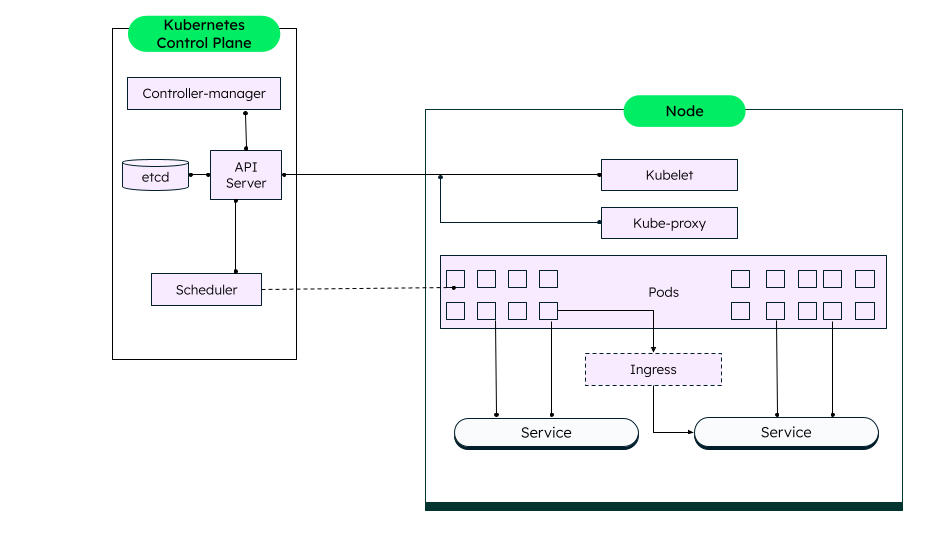
A Kubernetes cluster consists of two parts: a control plane (one or more machines running the Kubernetes control plane components) and one or more worker nodes. Each node is able to run pods, with a pod being a collection of one or more containers run together. The Kubernetes control manages the nodes and the pods—not the containers directly. The pods manage the container lifecycle.
Kubernetes architecture diagram showing a Control Plane (with API Server, etcd, Controller-manager, and Scheduler) managing a Node containing Kubelet, Kube-proxy, Pods, Ingress, and Services.
Key components of the Kubernetes orchestration layer include:
- Kubernetes Control Plane: The central management layer in a Kubernetes cluster. It runs a set of services that manage the overall state of the cluster and all workloads within it.
- Cluster: A collection of one or more bare-metal servers or virtual machines (referred to as nodes) providing the pooled resources used by Kubernetes to run one or more applications.
- Pod: A group of one or more containers and volumes co-located on the same host. Containers in the same pod share the same network namespace and can communicate with each other using localhost.
- etcd Database: A distributed key-value store that holds all cluster configuration, pod configuration, authentication, and metadata.
- Scheduler: Assigns newly created pods to suitable worker nodes based on resource availability and scheduling constraints.
- Controllers: Continuously reconcile the actual cluster state with the desired state by managing resources such as deployments, replica sets, nodes, and Endpoints.
- Kubelet: The primary agent on each node that interacts with the Kubernetes Control Plane and ensures all pods scheduled to that node are healthy, up, and running.
- Kube-proxy: Manages network communication on each node by implementing Kubernetes Services and routing traffic to the appropriate pods.
- Services: Act as a persistent network interface to pods, enabling communication from both inside and outside the cluster.
- Ingress: An optional component that allows more granular control over traffic to the pods than services alone offer—for example, directing traffic to the right web server based on the URL path.
Managed Kubernetes services
Managed Kubernetes services offered by leading cloud providers—including Google Kubernetes Engine (GKE) on Google Cloud Platform (GCP), Amazon Elastic Kubernetes Service (EKS), and Azure Kubernetes Service (AKS)—simplify cluster provisioning, upgrades, scaling, and maintenance. This allows organizations to focus on container deployment and application development instead of maintaining the underlying Kubernetes infrastructure.
As fully managed solutions, these services automate the deployment, scaling, and management of containerized workloads, making it easier to build and operate cloud-native applications.
Benefits of container orchestration
Container orchestration supports managing multiple clusters. This enables organizations to isolate workloads across different environments or regions while maintaining centralized governance.
DevOps and continuous delivery (CI/CD)
By automating deployment, scaling, and lifecycle management, container orchestrators make it easy to promote new code to production automatically after passing the tests. Orchestration platforms integrate directly with continuous integration/continuous deployment (CI/CD) tools to automate building, testing, and packaging containerized apps as part of the CI process, thus aligning with DevOps principles.
Scalability
When applications are built using microservices, adding more container instances increases capacity and throughput. Similarly, containers can be removed when demand falls. Using container orchestration makes this type of elastic scaling simple to achieve.
Isolation
Containers running on the same host are completely isolated from the others and the host itself. The single physical machine can host development, staging, and production environments simultaneously—even using conflicting language versions or database drivers—without risk of interface.
High availability
By running multiple containers, redundancy is more easily built into the application. If one container fails, then the surviving peers continue to provide the service. With container orchestration service, failing containers can be automatically recreated, restoring full capacity and redundancy.