Unified commerce with smart search
Retail teams have spent the better part of the last decade trying to deliver a seamless experience across web apps, mobile portals, physical storefronts, and support call centers. The data was always there, but it lived trapped inside isolated legacy silos. The result was fragmented operational friction: Differing online and in-store inventory counts, contradictory product recommendations, and mismatched search queries.
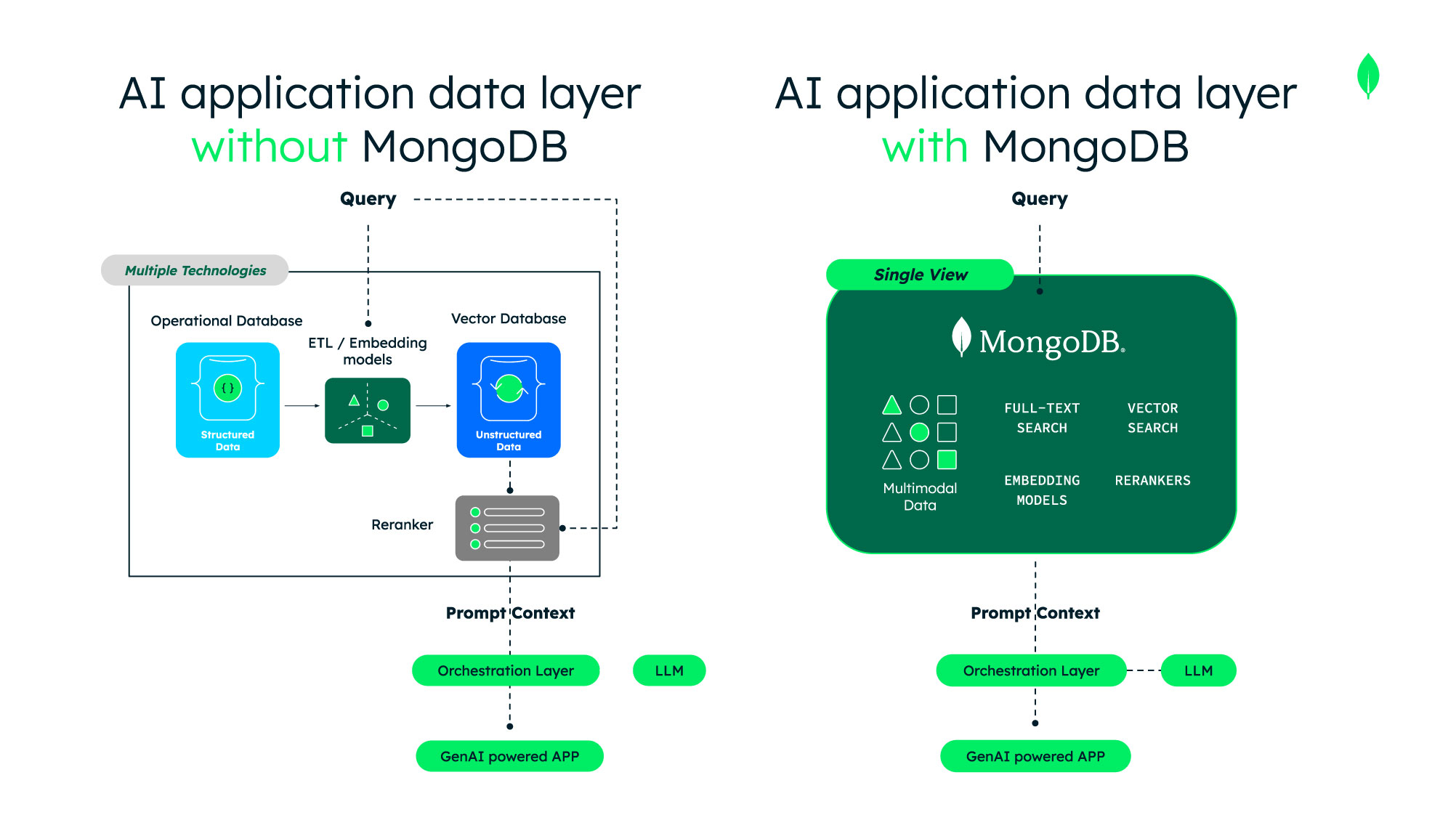
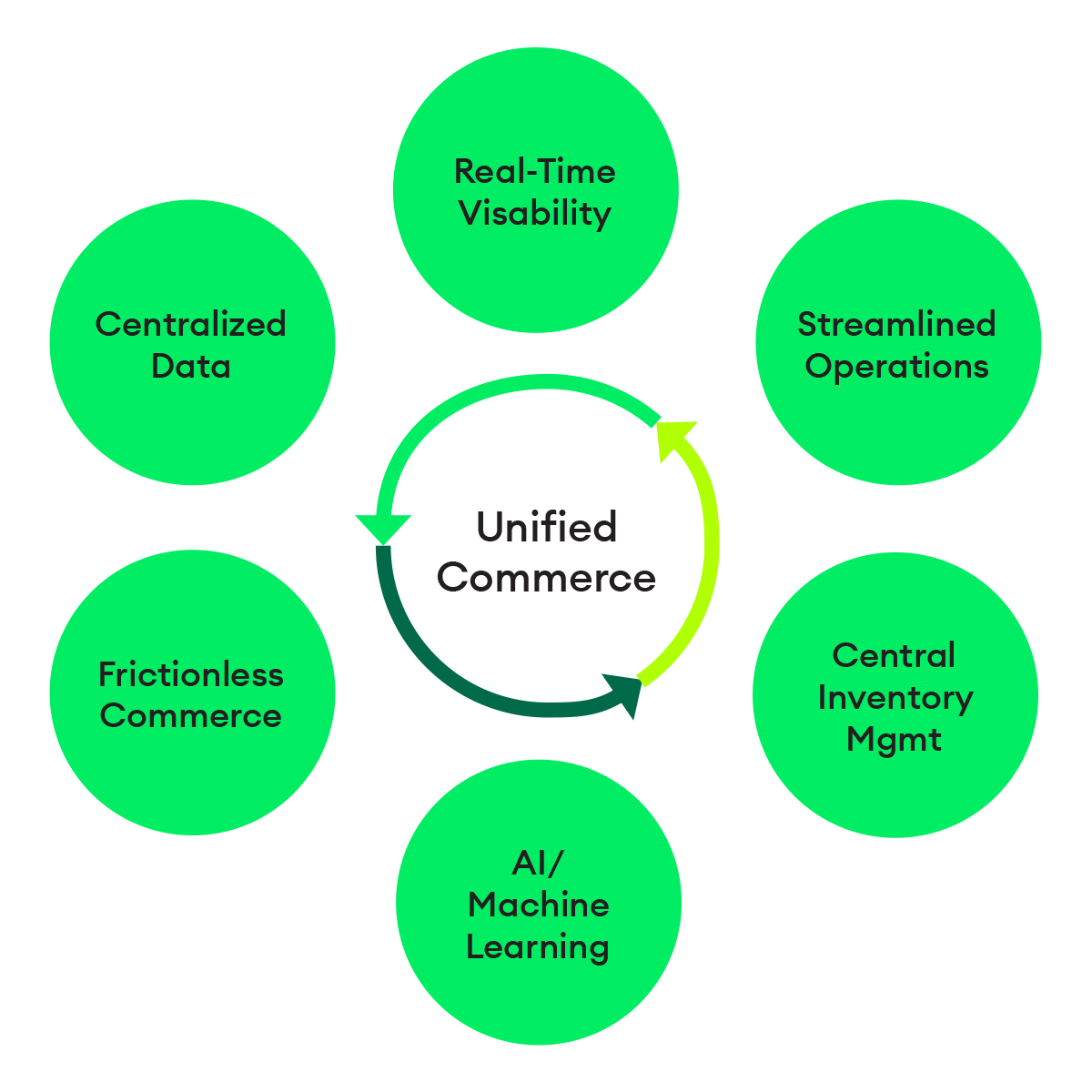
Unified commerce fixes these surface challenges by consolidating the data underneath into a single platform. With product catalogs, inventory, pricing, order histories, and personalization in one data store, search algorithms can gracefully combine lexical precision, semantic meaning, and geospatial signals. The exact same query that ranks products by relevance can surface the nearest store with live stock.
Once data is unified, cross-channel personalization draws on real-time history without waiting for overnight ETL batch jobs. Most importantly, the exact same data layer that powers the digital storefront grounds the customer support AI agent. This ensures a single source of truth across all channels.
Financial crime mitigation at machine speed
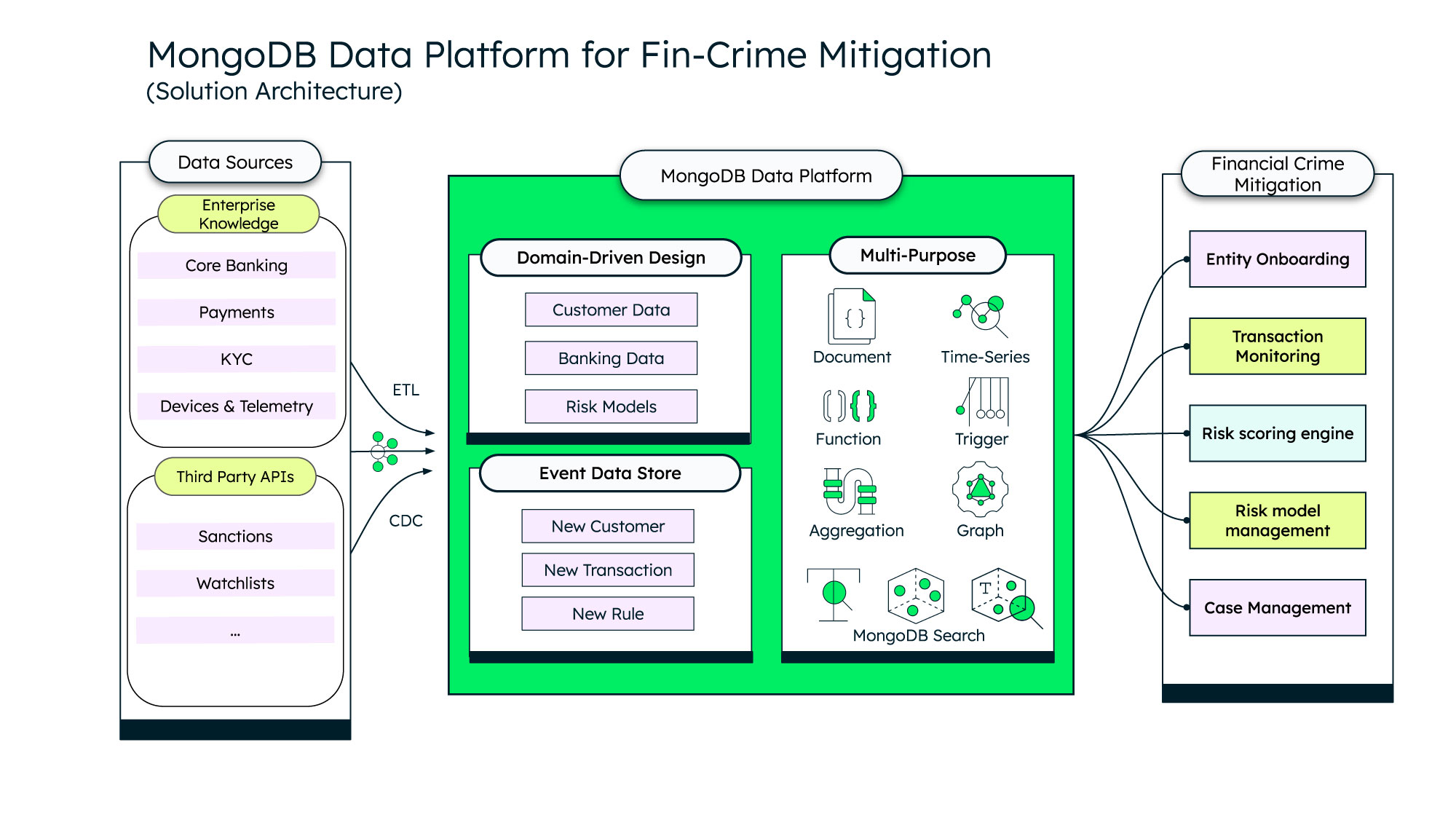
Financial crime detection sits at the intersection of two complex data problems. The first is structured data: Transactional records, account hierarchies, know your customer (KYC) fields, and regulatory sanction lists. The second is unstructured data: Investigator case notes, audio transcripts, and legal documents. For decades, banks have isolated both parts in separate systems, reconciling them at the alert level. Investigators pay the cost: 90% of legacy alerts are false positives that overwhelm compliance teams while real threats slip past.
With global financial institutions losing over $2 trillion to financial crime annually—a figure projected to hit $6 trillion by 2030—fragmentation is a severe risk. It makes platforms slower to detect threats, harder to audit, and more expensive to operate. Unifying structured records with unstructured documents under strict field-level access controls allows systems to identify complex patterns instantly.
Intelligent automotive after-sales applications
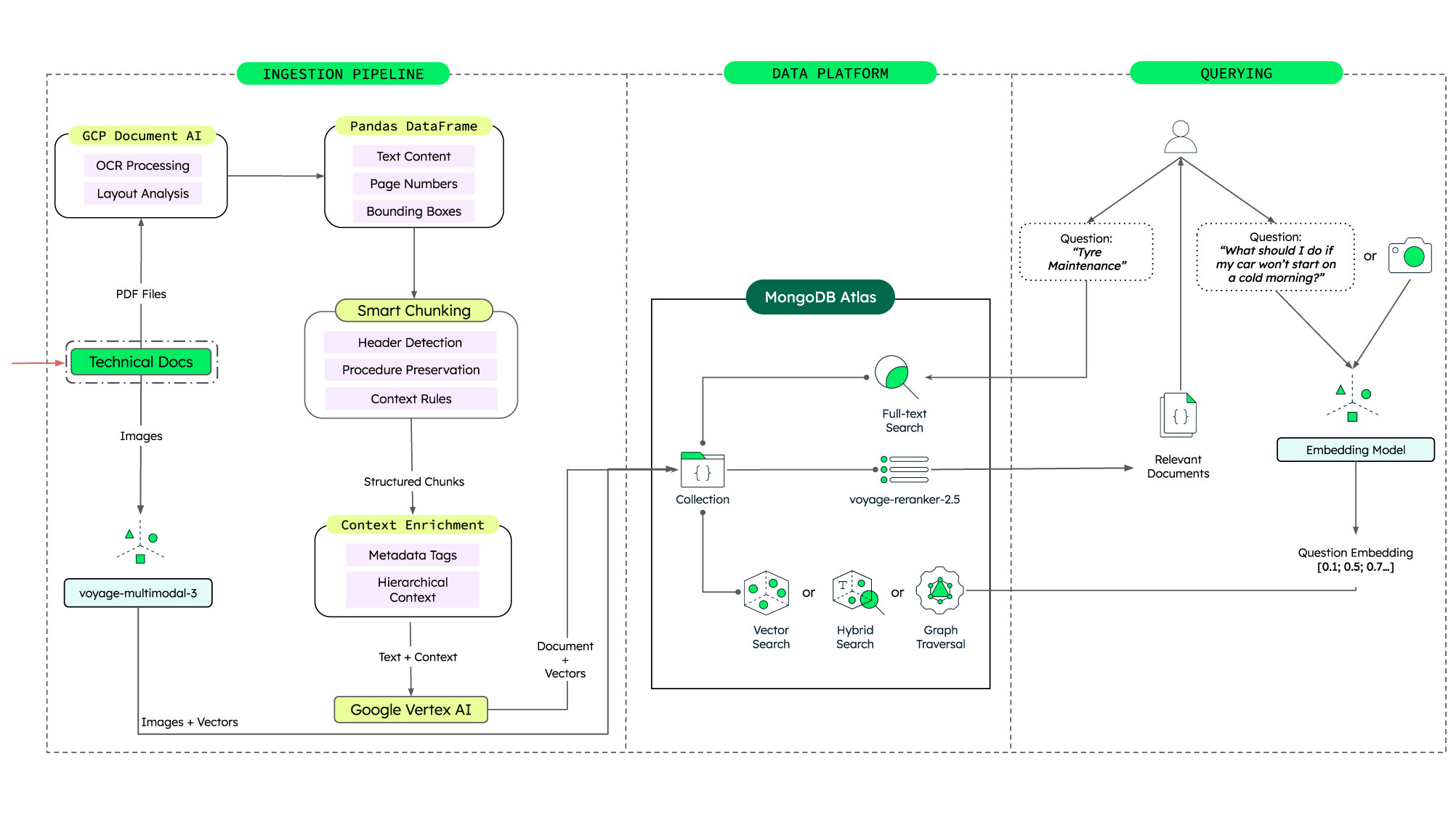
A similar challenge exists in automotive service bays, where technicians spend up to 30% of their time searching for repair information rather than fixing vehicles. Furthermore, "no fault found" (NFF) events—where a working component is replaced because diagnostics were inconclusive—account for nearly 30% of global warranty costs.
Once technical bulletins are processed through OCR and embedded with multimodal models inside MongoDB Atlas, a technician can describe a symptom or snap a photo of a corroded connector. The agent uses vector search to locate the correct manual section, traverses a connected fault tree with $graphLookup, and applies a reranker to surface safety warnings. This unified graph-and-vector backend lowers diagnostic times and reduces warranty expenses inside a single product cycle.