
LAUNCHMongoDB 8.3 is built for the sub-100ms retrieval & zero downtime AI demands. Read blog >
AI DATAStop fighting your data layer. Get the memory & retrieval agents need to scale. Read blog >

Okta powers natural language requests with MongoDB Vector Search on Atlas

An illustration of a woman working on a laptop
industry_enterprise

Industry

Software & Technology

atlas_product_family

Product

MongoDB Atlas

MongoDB Search

atlas_for_edge

Use Case

AI/ML

general_events_default

Customer since

2016

INTRODUCTION

Intelligent identity and security management for businesses

In an ideal world, our devices would instantly recognize us and grant access to our apps and documents — while safeguarding our information from everyone else. When networks were private and staff worked in the office, security was relatively easy for organizations to manage. But now, with the shift to the cloud and the rise of remote work, security and identity management are much more complex.

As the world’s leading identity security provider, Okta aspires to free everyone to safely use any technology on any device, all powered by their identity. With more than 18,000 customers globally, Otka has developed integrations for more than 7,000 applications.

To advance its identity governance and administration efforts, Okta acquired the workplace operations platform, atSpoke, in 2021. Rebranded as Okta Inbox, it makes requesting access to applications easy. For example, Okta Inbox’s built-in artificial intelligence means users can input natural language queries to find what they need quickly and easily.
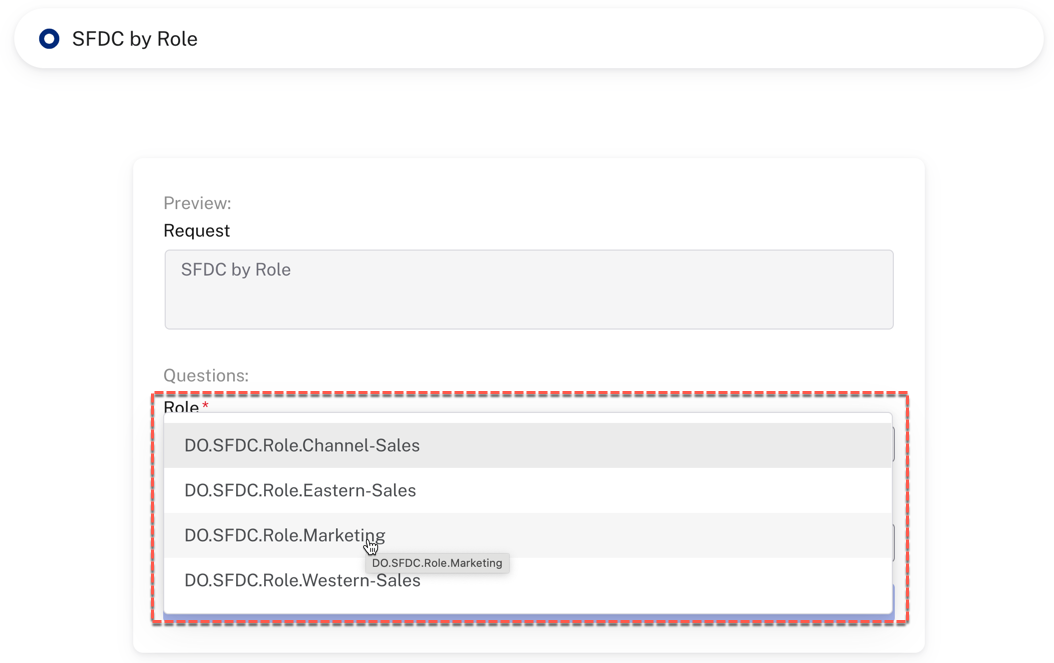
Okta Inbox user request form
Figure 1: Okta Inbox user request form

“We’re customer-obsessed. It’s in our DNA, from senior management to the development team. Everything we do is designed to help customers work faster and stay secure,” says Suchit Agarwal, director of engineering at Okta.


THE CHALLENGE

Finding a scalable way to power natural language queries

To create Okta Inbox, Okta wrote code and manually built machine learning models to power natural language queries. These models generate vector embeddings, a series of weighted values that detect a data set's qualitative and quantitative aspects.
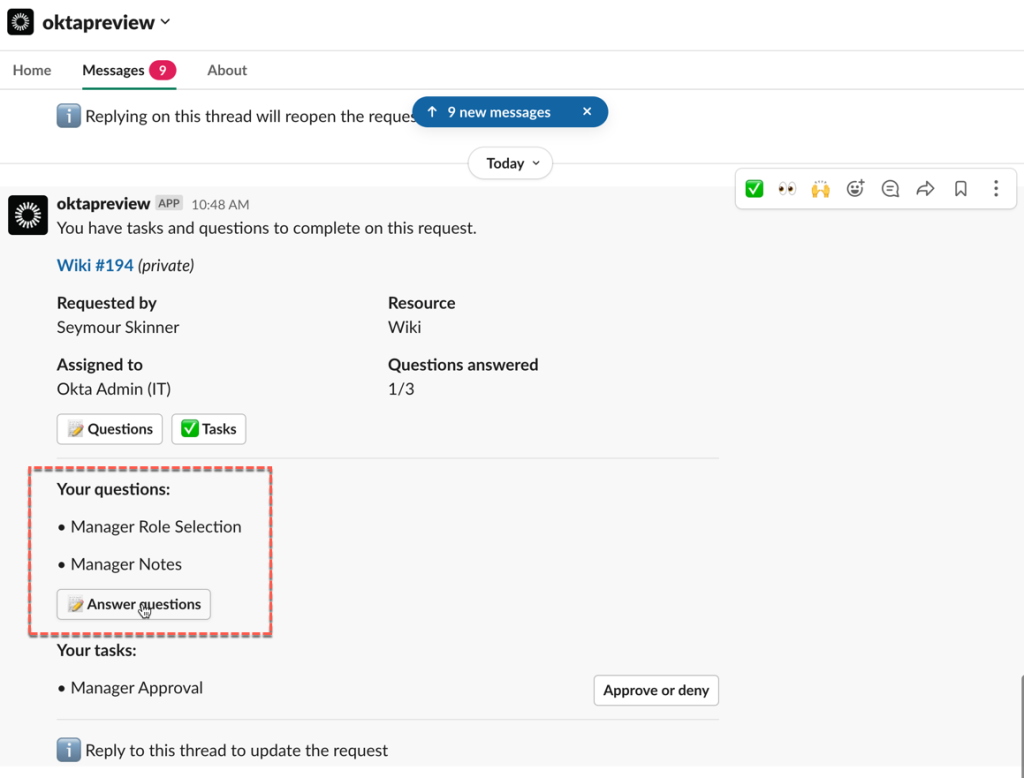
Okta Inbox administrator view
Figure 2: Okta Inbox administrator view

While the approach was effective, it needed more scalability as the business grew and limited how much the team could experiment. For example, when searching a vectorized collection of apps using natural language, the machine learning model would recognize that terms like ‘video conferencing’, ‘make a video call’ or, ‘conference call’ relate to that company’s preferred communication app.

Okta’s machine-learning models and embeddings were managed and maintained on a dedicated Kubernetes cluster. However, vectors either need to be stored in a dedicated vector database — which is an additional cost and solution to maintain — or a bolt-on search engine with vector search functionality needs to be installed. Adapting the environment to increase performance would incur additional fees and take time away from developers.


THE SOLUTION

Automating embeddings and optimizing algorithms

When given a first look at MongoDB Vector Search on Atlas, Okta realized that automating the manual work underpinning natural language queries with the solution would allow developers to focus on innovation.

“MongoDB Vector Search on Atlas was the answer to our problems. It simplifies a lot of the work that goes into making Okta Inbox super user-friendly for customers,” said Agarwal. “It was amazing to find a solution that integrates so easily with MongoDB Atlas. We didn’t have to compromise on having a single data platform.”

Instead of building a custom solution for embedding storage, embeddings could now be stored in MongoDB Atlas in collections. When prompted, MongoDB Vector Search on Atlas queries embeddings to find the right app quickly and easily. With the previous approach, Okta relied on home-grown search algorithms for these types of queries. MongoDB Atlas provided one efficient data layer that simplified these operations.

“Okta Inbox knows which app the user is requesting access to and automatically raises a ticket to process the request,” Agarwal explained. ”It receives thousands of requests through our chatbots, and we no longer need to manually process thousands of text embeddings to resolve those queries.”

Okta logo
“MongoDB Atlas is really flexible. You can’t paint yourself into a corner by developing something your database can’t handle.”
Suchit Agarwal
Director of Engineering, Okta

When they’re not working on development, the team uses MongoDB Atlas analytics and dashboards to monitor performance and to identify where queries can be optimized for cost efficiency. Ultimately, MongoDB Atlas helps Okta focus on the most important issues and accelerate innovation.

“With backups, upgrades, and scaling taken care of, my team can focus on developing new products that support our strategic roadmap,” said Agarwal. With the extra time MongoDB Atlas gives them, Agarwal and team can fine-tune Okta solutions and experiment with different models — while keeping operational costs to a minimum. “We can run many algorithms simultaneously to compare and contrast, which is better. That speeds up optimization, which benefits the customer,” added Agarwal.


THE RESULTS

Great functionality with 30% cost savings

With MongoDB Atlas and MongoDB Vector Search on Atlas, Okta can focus on building great new products and giving customers an excellent user experience. Additionally, Okta knows its database is resilient and scalable enough to handle growing demand.

“MongoDB Atlas is flexible. You can’t paint yourself into a corner by developing something your database can’t handle. New products are highly adopted, and we know our database will never be the bottleneck that interrupts the customer experience,” said Agarwal.

MongoDB also helps Okta focus on delivering more value quickly. Because they’re not running extra infrastructure, developers can iterate faster, and MongoDB Atlas’s simplified environment is leaner yet higher performing and less prone to errors.

“MongoDB takes administration away from my team. Developers are much happier focusing on optimizing the database rather than maintaining it,” Agarwal explained. “We’re also on track to reduce operating costs by 30% compared to the self-hosted solution.”

Okta Inbox is now live on MongoDB Vector Search on Atlas, and the transition has been smooth and without any issues.

“We’ve been on an exciting journey with MongoDB. The team has been very engaged with us at every step. They’re super responsive, transparent, and collaborative,” notes Agarwal. “With their support we can iterate on new ideas and features and get to market faster.”

Okta logo
“MongoDB Vector Search on Atlas was the solution to our problems. It simplifies a lot of the work that goes into making Okta Inbox super user friendly for customers.”
Suchit Agarwal
Director of Engineering, Okta

Next Steps

To learn more about how others are innovating with AI, check out the Building AI with MongoDB case study series. You can also register for MongoDB Atlas and visit the MongoDB Vector Search on Atlas Quick Start guide to start building smarter searches or get started on gen AI in your next project.

Take the next step

Get access to all the tools and resources you need to start building something great when you register today.
Get StartedTalk to an expert
Illustration of a database.