Modernization without disruption
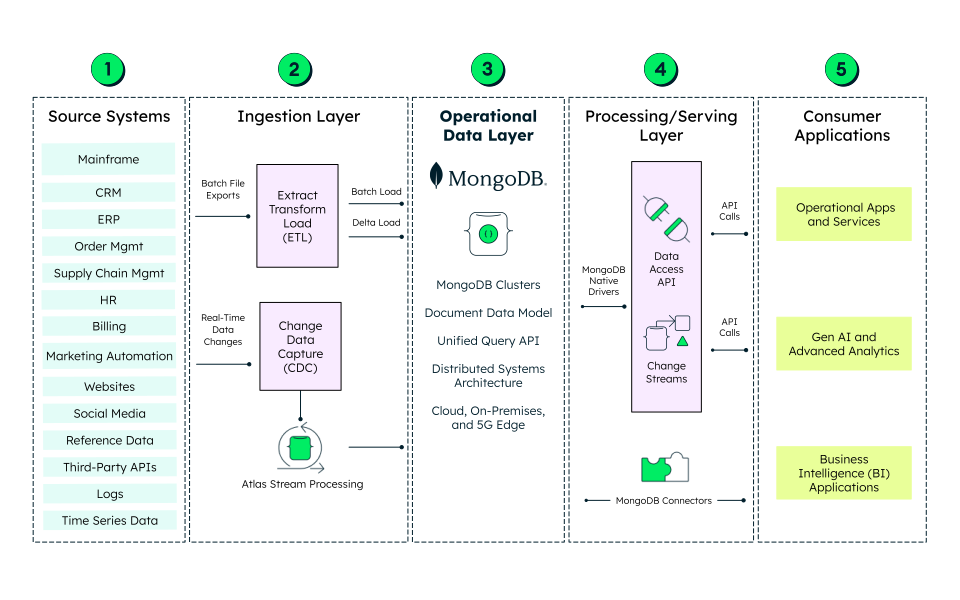
An Operational Data Layer (ODL)—also known as an operational data store—is a smart architectural approach that brings together data from multiple sources into a single, consistent view. It helps eliminate the mess of disparate data sources and legacy systems, making real-time operational data more accessible across your operational systems. With everything connected through a centralized repository, teams can avoid data silos and easily support both day-to-day operations and analytical reporting without slowing things down. By separating backend systems from what users actually interact with, an ODL simplifies integration, speeds up development, and helps ensure strong data governance.
What makes it even more powerful is the foundation it runs on. MongoDB’s flexible document model makes it easy to handle structured, semi-structured, and unstructured data all in one place. Whether you’re managing customer data, transactional data, or incoming raw data, MongoDB scales to support everything from inventory management systems to online transaction processing. It also helps you analyze data in real time, catch suspicious transactions, track sales trends, and tailor customer interactions—all while keeping your operational workloads running smoothly. With an ODL in place, it’s easier to modernize your systems, unlock valuable insights, and stay ahead of the curve, without having to overhaul everything at once.
Read more about the Operational Data Layer >
Why Implement an ODL?
Implementing an Operational Data Layer (ODL) is essential to overcome data fragmentation from disparate data sources that hinder access to real-time operational data. By serving as a centralized repository, an operational data store makes it possible to collect data from multiple systems, including transactional databases, inventory management systems, and other operational systems, ensuring data consistency, high-quality data, and data accuracy.
This unified layer enables organizations to combine customer data, transactional data, and historical data, supporting both operational workloads and analytical reporting. With improved access to the data in consistent data formats, businesses gain real-time visibility, actionable insights, and in-depth analysis that fuel operational decision making, tactical execution, and business intelligence. By integrating with operational databases, data warehouses, and data lakes, and aligning with a resilient data architecture and data governance framework, the ODL helps streamline operations, optimize supply chain management, detect suspicious transactions, track sales, and enhance customer interactions. This ultimately drives personalized interactions, refined pricing strategies, an enhanced customer experience, and a lasting competitive edge.
Next-Gen AI Applications
AI applications and models depend on real-time, clean, and context-rich operational data often scattered across systems. An ODL unifies real-time, contextual data with native vector search to power accurate RAG, smart apps, and low-latency AI agents.
Customer 360 and Single View
Achieving a holistic view and real-time personalization is challenging due to data silos, disparate data sources, and incomplete records. An operational data store is a real-time canonical source, consolidating identities with high consistency across systems.
Data-as-a-Service (DaaS)
Data tightly bound to apps causes slow, non-reusable access. An ODL centralizes and harmonizes data, exposing it via robust APIs and event streams, transforming data into a discoverable, versioned, on-demand service with real-time freshness, trust, and compliance.
Data Governance and Sovereignty
Fragmented data across silos and inconsistent governance and sovereignty controls expose organizations to increased risk, regulatory pressure, and barriers to secure collaboration. An ODL centralizes policy enforcement—delivering secure, auditable, and regulation-aligned data access without slowing innovation.
Real-Time Data APIs
Backend systems are not designed to expose real-time, reliable, and composable APIs over operational data. An ODL provides a decoupled API layer with stable, scalable access to operational data for apps and partners.
Why MongoDB for an Operational Data Layer?