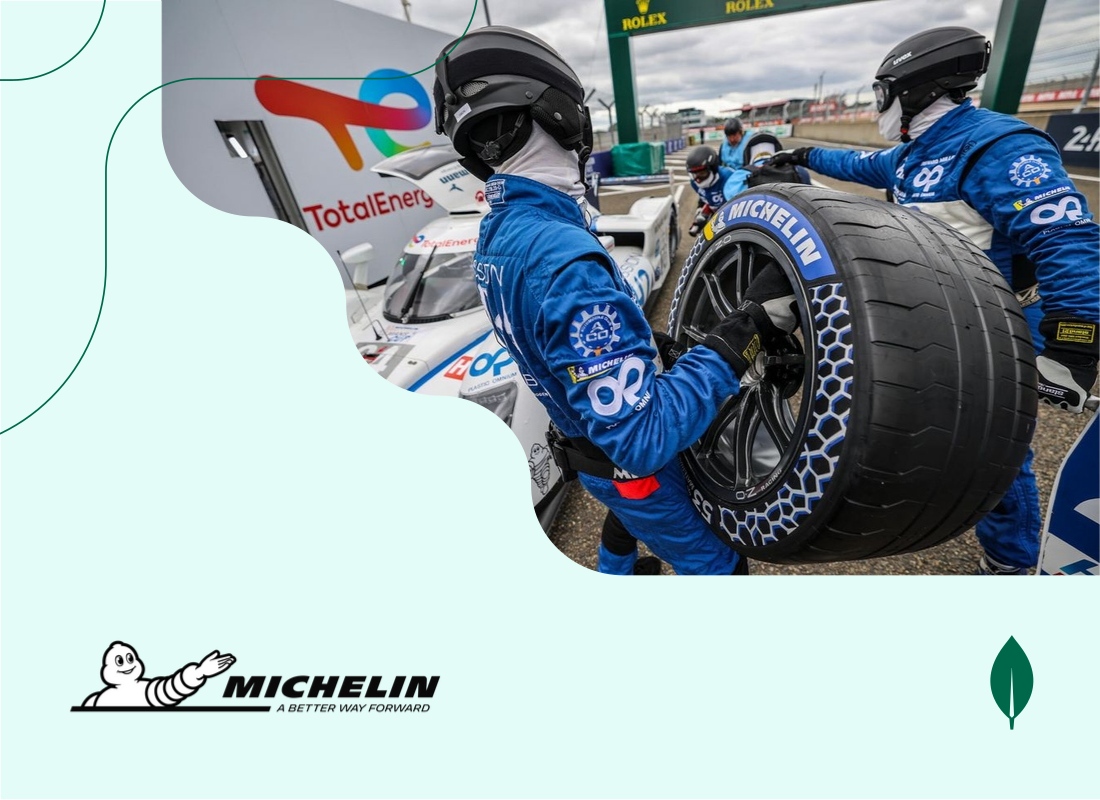


Michelin is a world-leading manufacturer of solutions that transform the daily lives of many. While this international company is mostly known for its tires and the famous restaurant guide, it also manufactures high-performance textile yarns, snowmobile tracks, inflatable emergency hospitals, and 3D printer transmission belts. Years ago, to manage all its product and service repositories, the company developed a master data management (MDM) tool called PS9.

Time and cost of a SaaS solution
Just like any other aging tech solution, the MDM at Michelin was becoming a challenge. In fact, according to Damien Martin-Prével, MDM Delivery Leader at Michelin, “There were many problems.” The application was hosted in a software-as-a-service (SaaS) environment of an external provider and experienced long and frustrating delays in terms of scalability.
Each new feature that was requested could take up to two years to implement, and even the smallest incidents took over 20 days to resolve, all while licensing and hidden costs continued to rise. As a result, Michelin’s development teams became consumed with urgent day-to-day issues, leaving them with little capacity to explore ways to add value to the application.
To address some of these challenges and automate tasks, the development team resorted to quick fixes and temporary patches—solutions that were functional but far from elegant. For instance, the module for calculating the eco-tax for various Michelin businesses was a makeshift solution.
This approach, combined with a strained relationship with the SaaS provider, left PS9 users frustrated and stressed. The interface was overly complex, and response times were inconsistent, often varying depending on the user’s geographic location.
MongoDB for a modern architecture
Faced with numerous technical and functional challenges, along with the growing demand for new features to meet increasing business needs, Michelin’s IT team decided it was time to change its approach. The company chose to reinvent its PS9 supply chain application by making the user the focal point of its strategy. Regaining control of both the application’s functionalities and its performance was crucial for improving efficiency. With the contract with the SaaS provider nearing its end, the timing seemed perfect, though it put pressure on the team. “I had 10 months to migrate everything and make it work,” said Martin-Prével.
The solution was to adopt a document-driven approach, using MongoDB Atlas. As a source-available NoSQL database, MongoDB can handle structured, semi-structured, and unstructured data. It uses a document-oriented model and an unstructured query language, making it highly adaptable.
Additionally, MongoDB already provided Michelin with a native connector for Kafka, the event-streaming platform the company had relied on for years. This connector enabled the business to manage real-time events—such as the logistics of transporting tires from 67 factories to warehouses across 171 countries—seamlessly and in real time.
“We were able to transfer all the information from one environment to another in just a few hours and without the slightest problem,” said Martin-Prével.
An all-terrain scalable application
By adopting MongoDB Atlas, Michelin’s IT team regained full control over its environment. PS9 users now have the ability to create custom collections of documents, tailored to their needs, through a simple yet powerful interface. Feature requests that once took up to two years to implement are now completed in just 20 days, while processing times and calculations have been reduced from 8 hours to a mere 24 seconds.
“We have a responsiveness that is mind blowing,” said Martin-Prével. “We have moved from complaining to thinking about the future.”
The seamless migration to a modern solution enabled Michelin to eliminate the old, clunky patches and fixes, significantly improving the functional quality of PS9. One of the standout advantages of the new system is the near-instantaneous reporting of issues. For example, during a manufacturing phase at a factory, Michelin was able to correct an error in tire diameter calculations in just minutes, rather than the days it would have taken before.
Furthermore, after migrating Kafka data to MongoDB, the IT team was able to immediately identify and resolve numerous issues that were previously hidden. The enhanced ability to investigate and address incidents has also simplified support and maintenance. Importantly, this transition helped eliminate shadow IT—unauthorized use of other IT systems and services—ensuring all users now have easy access to a single, trusted source of information within the supply chain.
The shift to MongoDB has been particularly beneficial for developers, who no longer spend time troubleshooting. Instead, they can use reliable data to focus on creating new, value-driven features for PS9. Meanwhile, costs have been significantly reduced, facilitating better investments and improved profitability.
By selecting MongoDB, Michelin ensured that its data-intensive applications, such as the supply chain application and data repositories, now run at optimal performance and efficiently manage high-quality data. This has led to significant time and cost savings, streamlined processes, and improved user satisfaction—all of which have had a positive impact on customers as well.
Conclusion
Today, MongoDB is a key driver of innovation at Michelin. Beyond the new architecture supporting a high-performance supply chain, Michelin now has a reliable, sustainable, and scalable IT environment. This positions the company to maintain its market leadership while addressing emerging needs and opportunities, including the integration of AI.

_1.svg)